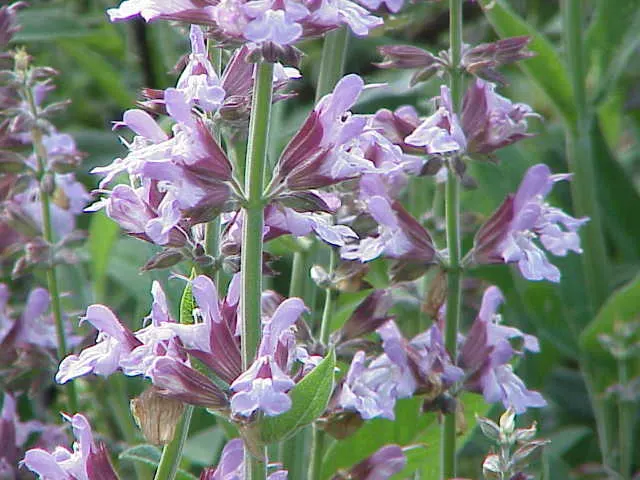
Photo: Kurt Stüber [1], CC BY-SA 3.0 (via Wikimedia Commons)
Sage
Salvia officinalis
Also known as Garden Sage, Common Sage, Culinary Sage, True Sage
Key benefits
✦Traditional uses
✦Sage takes its name from the Latin salvere, to save or heal, and for centuries it lived up to that name in kitchen gardens and apothecary shelves alike. Medieval households hung bundles of it by the door and stirred it into tonics meant to fortify the body through long winters, while herbalists across Europe reached for sage tea to soothe a scratchy throat or settle a heavy meal. Old folk sayings asked why anyone should die while sage grows in the garden, a nod to just how trusted and constant this herb has been. It has also long served as a natural aid for gum and mouth care, chewed fresh or gargled as a strong infusion.
How to grow & use it
✦The full apothecary for Sage
Traditional remedies and step-by-step preparations, a complete growing guide, and how to harvest, dry, and store it, all unlocked with HerbLens Unlimited.
- ✦Remedies & preparations
- ✦ Growing guide
- ✦Harvest & storage
From under $6 a month. Free plant identifications always included.
- ✦Thyme
- ✦Rosemary
- ✦Lemon
- ✦Rosemary
- ✦Savory
“For the herb that has guarded kitchens and quieted sore throats since before written history.”
In parts of medieval Europe, sage was so trusted as a healing herb that traders bartered it for Chinese tea at a rate of several pounds of tea for just one pound of dried sage leaves.
Ordinary culinary use of sage is safe. Concentrated forms are not: sage contains thujone, so avoid the essential oil internally and don't drink strong medicinal-strength tea daily for long periods, and pregnant or breastfeeding people and those with epilepsy should avoid therapeutic amounts.