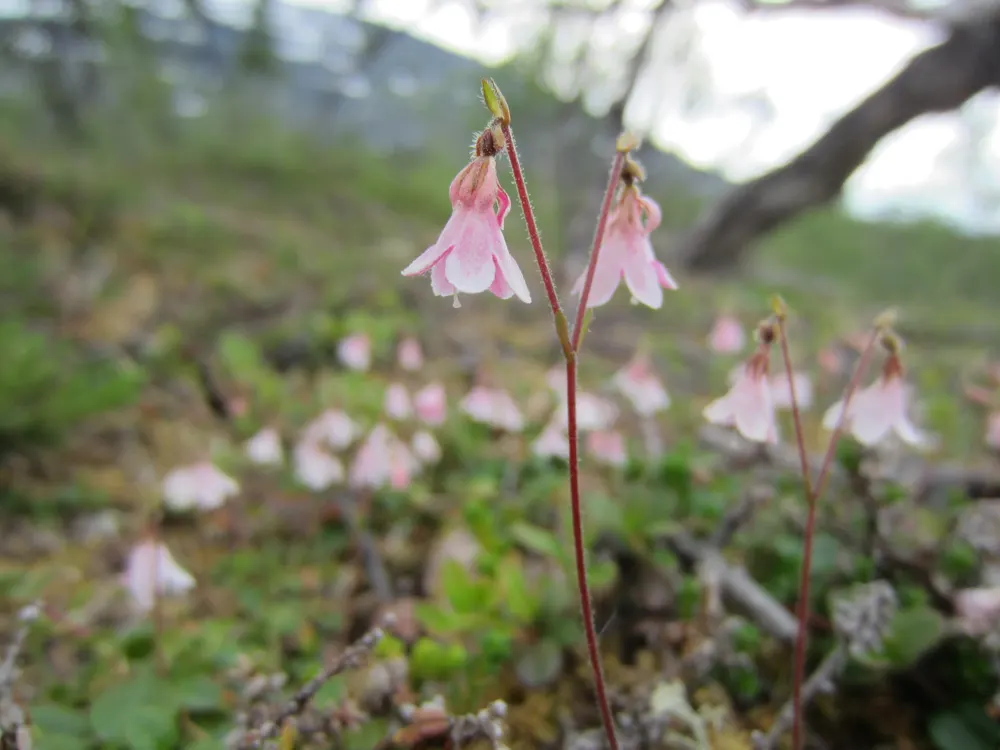
Photo: Statskog SF, CC BY-SA 2.0 (via Wikimedia Commons)
Twinflower
Linnaea borealis
Also known as Northern Twinflower, Linnaea, Deervine
Key benefits
✦Traditional uses
✦Twinflower is not a plant of the kitchen or the medicine chest, but of quiet reverence. It carries the personal emblem of Carl Linnaeus himself, the Swedish botanist who founded the naming system we still use for every plant in this atlas. Though the genus was named in his honor by a colleague, Linnaeus loved it so much he wore a sprig in his lapel for a formal portrait and called it a modest little northern flower that reminded him of his own humble beginnings. For foragers and woodland walkers across the north, finding a mat of twinflower in bloom, its twin pink bells nodding on a single slender stalk, has long been treated as a small, private delight rather than a plant to gather.
How to grow & use it
✦The full apothecary for Twinflower
Traditional remedies and step-by-step preparations, a complete growing guide, and how to harvest, dry, and store it, all unlocked with HerbLens Unlimited.
- ✦Remedies & preparations
- ✦ Growing guide
- ✦Harvest & storage
From under $6 a month. Free plant identifications always included.
- ✦Partridgeberry
- ✦Wintergreen
- ✦Bunchberry
- ✦Partridgeberry (Mitchella repens), for a similar low evergreen shade groundcover
- ✦Wintergreen (Gaultheria procumbens), for fragrant matting cover under conifers
“For the quiet, shaded corners of a garden that ask for nothing but patience and cool, mossy ground.”
Linnaeus loved this small flower so much that he chose it as his own emblem, appearing in his 1749 portrait holding a sprig of it, even though the plant was formally named Linnaea in his honor by his friend and fellow botanist Jan Frederik Gronovius, not by Linnaeus himself.
Twinflower has no history of use as a food or remedy and isn't eaten or brewed; it's grown and admired as a woodland plant. Wild colonies are slow to recover from disturbance, so leave plants in the forest untouched and use nursery-grown stock instead.