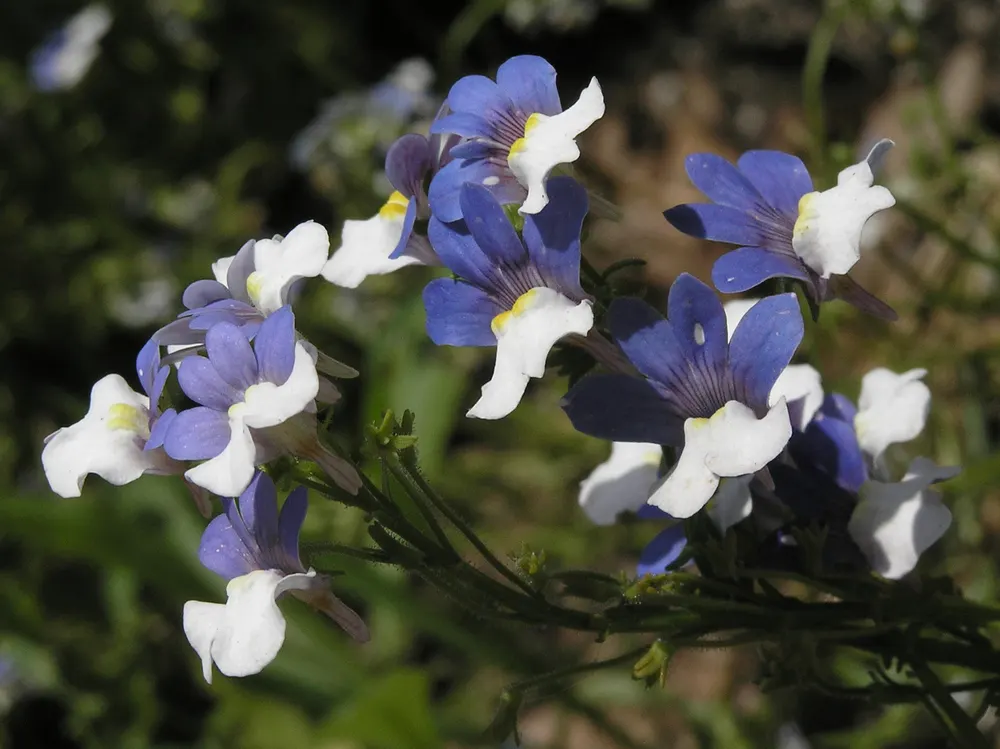
Photo: 阿橋 HQ, CC BY-SA 2.0 (via Wikimedia Commons)
Cape Jewels
Nemesia strumosa
Also known as Cape Jewels, Nemesia, Pouch Nemesia
Key benefits
✦Traditional uses
✦Nemesia strumosa has no folk-medicine or culinary tradition to speak of. Its story is a horticultural one: this cheerful little annual was gathered from the wild hills of South Africa's Cape region and carried into European greenhouses in the nineteenth century, where breeders quickly fell for its snapdragon-shaped, jewel-toned flowers. Within a few generations it went from a wildflower on rocky Cape slopes to a staple of Victorian bedding schemes and, later, of window boxes and cottage borders everywhere. Its value has always been ornamental, brightening a garden bed the way a handful of confetti brightens a table.
How to grow & use it
✦The full apothecary for Cape Jewels
Traditional remedies and step-by-step preparations, a complete growing guide, and how to harvest, dry, and store it, all unlocked with HerbLens Unlimited.
- ✦Remedies & preparations
- ✦ Growing guide
- ✦Harvest & storage
From under $6 a month. Free plant identifications always included.
- ✦Sweet alyssum
- ✦Lobelia
- ✦Pansy
- ✦Diascia
- ✦Osteospermum
“When a border, window box, or patio pot needs to look like it has been dusted in confetti, from the first mild days of spring until summer's heat finally asks it to rest.”
The genus name Nemesia borrows from the ancient Greek word nemesion, a name the physician Dioscorides once used for an unrelated snapdragon-like plant, simply because early botanists thought the flowers looked so similar.
Grown as a garden ornamental with no history of medicinal or culinary use; keep it away from children and pets who might be drawn to its bright blooms.