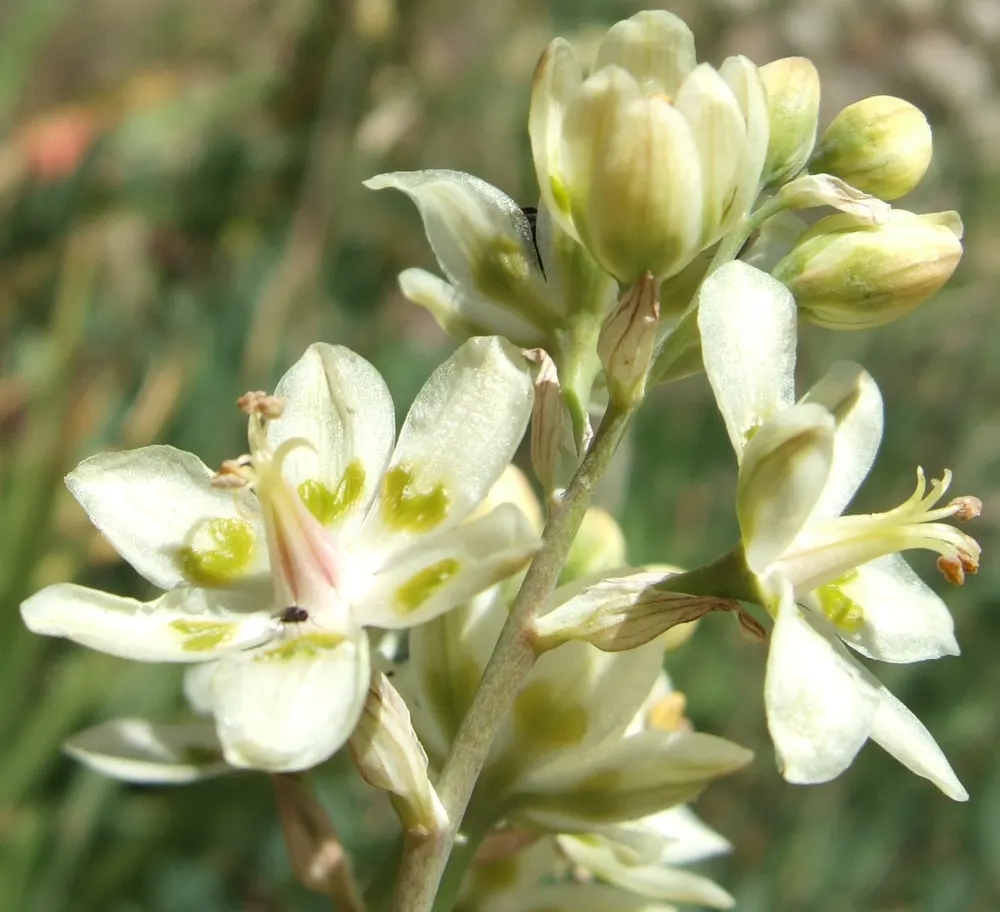
Photo: Adam Humphreys, CC BY-SA 3.0 (via Wikimedia Commons)
Mountain Deathcamas
Anticlea elegans
Also known as Elegant deathcamas, White camas, Alkali grass, Zigadenus elegans (synonym), Zigadenus elegans
Key benefits
✦Traditional uses
✦Mountain deathcamas holds a peculiar place in plant lore, not as a remedy but as a lesson. It grows alongside the true camas plants that fed so many Native American nations for centuries, its pale, pretty spikes easy to mistake for its edible cousin until you learn to look closer. Generations of foragers, and the elders who taught them, passed down careful rules for telling the two apart, because a mistake here was never a small one. Its story in traditional knowledge is really the story of vigilance itself, a plant respected precisely because it could not be used.
How to grow & use it
✦The full apothecary for Mountain Deathcamas
Traditional remedies and step-by-step preparations, a complete growing guide, and how to harvest, dry, and store it, all unlocked with HerbLens Unlimited.
- ✦Remedies & preparations
- ✦ Growing guide
- ✦Harvest & storage
From under $6 a month. Free plant identifications always included.
“A pale, elegant warning growing in open meadows, lovely to look at, never to gather.”
The surest way early foragers told mountain deathcamas from true edible camas was by scent alone. Wild onions and edible camas bulbs carry a distinct oniony smell, while deathcamas bulbs have none at all, so a quick sniff at the base of the plant was, and still is, one of the oldest field tests in the book.
Mountain deathcamas is genuinely toxic and should never be eaten, brewed, or otherwise ingested in any form. Every part of the plant, especially the bulb and seeds, contains steroidal alkaloids (including zygadenine and related compounds) that disrupt heart rhythm and blood pressure. Poisoning causes vomiting, weakness, drooling, a slowed and irregular heartbeat, difficulty breathing, and has caused deaths in both humans and livestock, particularly sheep grazing spring pastures. Its greatest danger is mistaken identity: the bulbs closely resemble wild onions and edible camas (Camassia species) but lack any onion smell, a mix-up that has poisoned foragers for generations. Keep this plant well away from children, pets, and grazing animals, and never taste any part of it to test identification. If ingestion is suspected, treat it as a medical emergency and contact Poison Control or seek emergency care immediately rather than attempting any home remedy.