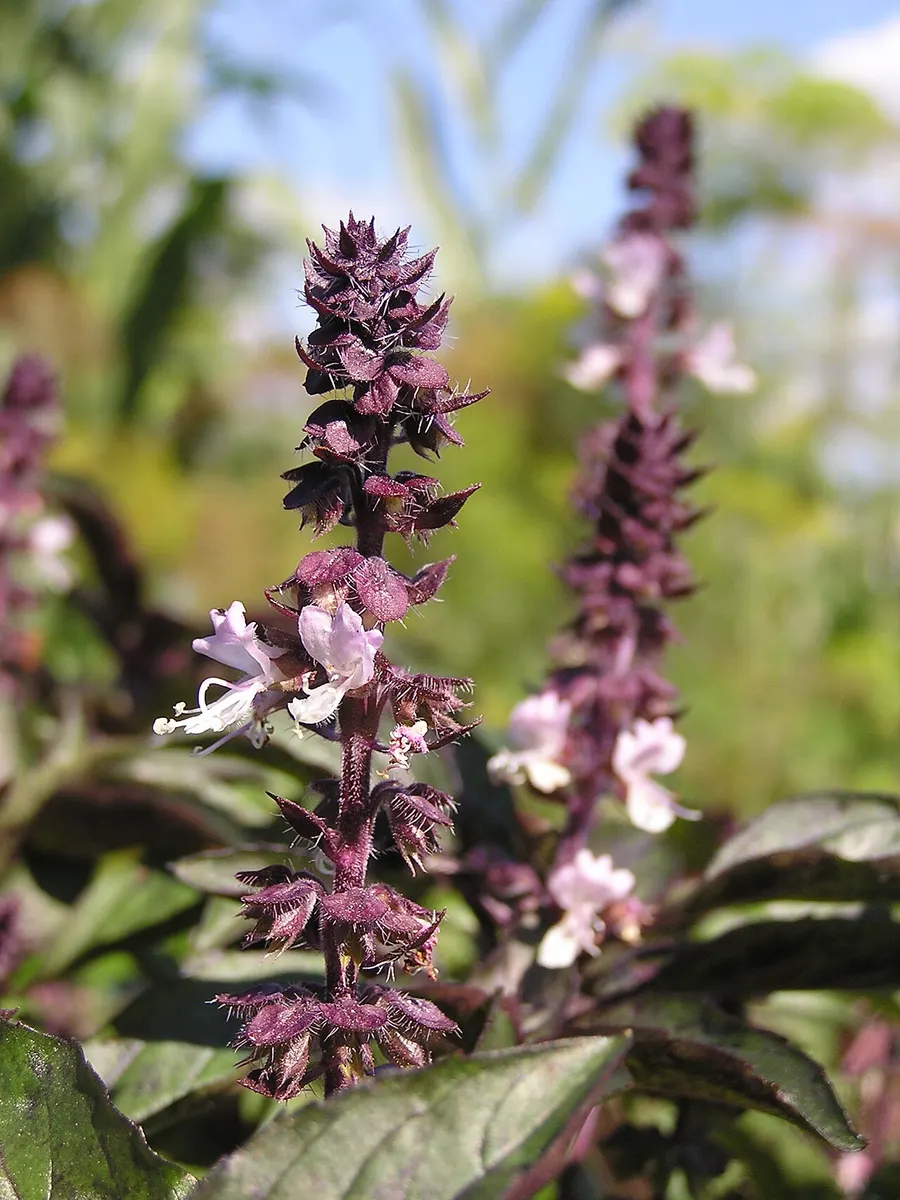
Photo: Andrey Butko, CC BY-SA 3.0 (via Wikimedia Commons)
Basil
Ocimum basilicum
Also known as Sweet Basil, Common Basil, Garden Basil, Saint Joseph's Wort
Key benefits
✦Traditional uses
✦Basil has followed cooks and healers alike for thousands of years, moving from ancient Mediterranean kitchens to Ayurvedic medicine chests to the herb pots on modern windowsills. In Italy it became the soul of pesto and summer sauces, while traditional European and South Asian herbalism turned to its warm, clove scented leaves as a tea for settling an uneasy stomach after a heavy meal. Cooks and grandmothers both came to trust it as an herb that soothes as readily as it seasons, a plant equally at home easing a fussy digestion or brightening a plate of tomatoes. Note that sweet basil, Ocimum basilicum, is a culinary cousin of holy basil or tulsi, Ocimum tenuiflorum, which carries its own separate and deeply sacred history in India.
How to grow & use it
✦The full apothecary for Basil
Traditional remedies and step-by-step preparations, a complete growing guide, and how to harvest, dry, and store it, all unlocked with HerbLens Unlimited.
- ✦Remedies & preparations
- ✦ Growing guide
- ✦Harvest & storage
From under $6 a month. Free plant identifications always included.
- ✦Oregano
- ✦Lemon Balm
- ✦Thyme
- ✦Oregano
- ✦Fresh Mint
“When the kitchen wants brightness and the belly wants ease.”
The name basil comes from the Greek word basilikon, meaning kingly, since the ancient Greeks and Romans considered its fragrance fit for royalty even as they argued over whether the plant brought good fortune or bad.
Basil is safe in ordinary culinary amounts. Its essential oil should not be taken internally or used in pregnancy, and medicinal-strength amounts contain enough vitamin K to interact with blood thinners like warfarin.