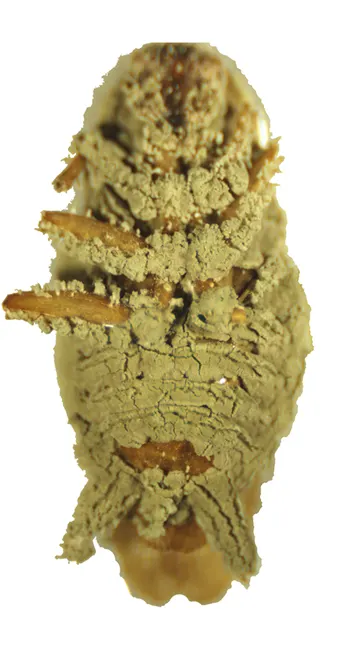
Photo: Chengshu Wang and Yuxian Xia, CC BY 2.5 (via Wikimedia Commons)
Green Muscardine Fungus
Metarhizium anisopliae
Also known as Green muscardine fungus, Metarhizium biopesticide, Metarhizium anisopliae
Key benefits
✦Traditional uses
✦Metarhizium anisopliae was first described in 1879 by the Russian naturalist Élie Metchnikoff, who noticed a strange green mold sweeping through a plague of wheat cockchafer beetle larvae and killing them outright. Farmers and agronomists have leaned on that same green mold ever since, cultivating it as one of the oldest documented biological pest controls in agricultural science. Long before synthetic pesticides existed, this fungus was already quietly patrolling the soil, latching onto beetles, locusts, and weevils and turning their bodies into fresh spore colonies. Today it is still grown commercially and applied to fields, greenhouses, and lawns as a living, self-renewing alternative to chemical sprays.
How to grow & use it
✦The full apothecary for Green Muscardine Fungus
Traditional remedies and step-by-step preparations, a complete growing guide, and how to harvest, dry, and store it, all unlocked with HerbLens Unlimited.
- ✦Remedies & preparations
- ✦ Growing guide
- ✦Harvest & storage
From under $6 a month. Free plant identifications always included.
- ✦Beauveria bassiana (a companion biocontrol fungus)
- ✦Neem oil (for combined integrated pest management)
- ✦Beauveria bassiana
- ✦Bacillus thuringiensis (Bt)
“When the soil itself needs a quiet, living defender against the grubs and beetles hiding beneath it.”
It was the very first fungus ever scientifically documented as an insect killer, and researchers today are testing engineered and wild strains of it as a natural weapon against malaria-carrying mosquitoes and migratory locust swarms.
Metarhizium anisopliae is a fungus, not a culinary or medicinal herb, and it is not meant to be eaten, brewed, or taken as a remedy of any kind. It exists in nature and in commerce as a biological insecticide, one that infects and kills insects, and it has no traditional history of human ingestion. Registered biopesticide products containing it are generally considered low risk to humans and pets when used exactly as labeled, but inhaling concentrated spore powder can irritate the lungs and airways, and people with weakened immune systems, chronic respiratory conditions, or asthma should avoid direct contact with concentrated spore products altogether, as opportunistic fungal infections, though rare, have been documented in vulnerable individuals. Always wear gloves and a mask when handling commercial powders or granules, keep products well away from children, pets, food, and beneficial insects like bees, and follow every label instruction exactly. If you have health concerns after exposure, or questions about safe use around your family, pets, garden, or livestock, talk to a physician, poison control, or your local agricultural extension office before proceeding.