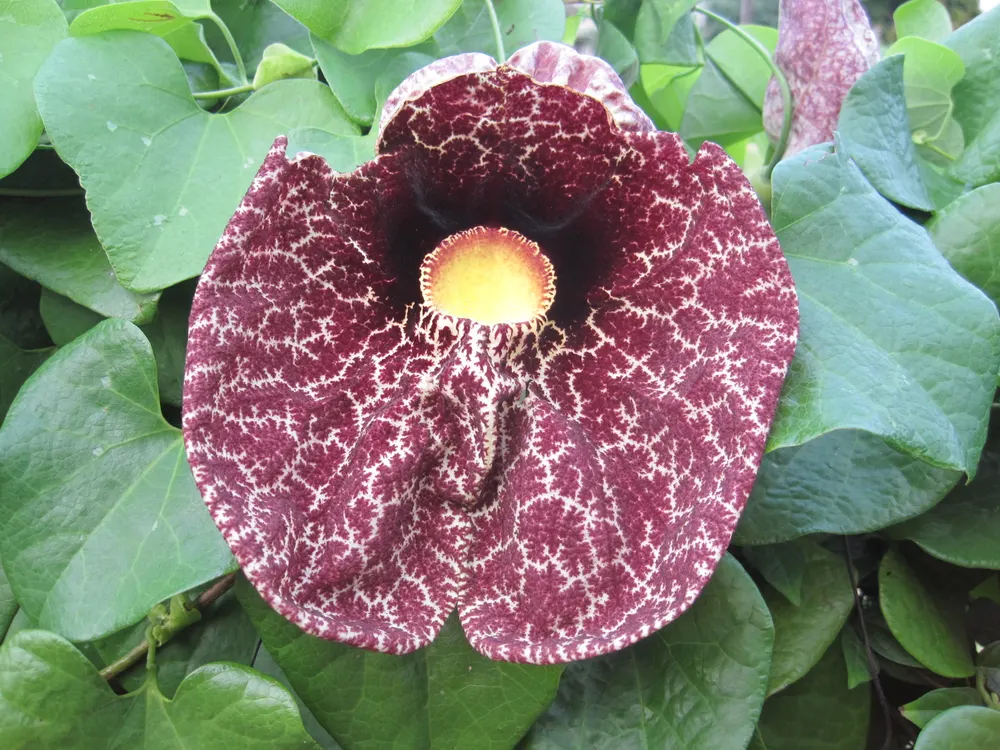
Photo: Joel Bradshaw, Public domain (via Wikimedia Commons)
Calico Flower
Aristolochia elegans
Also known as Elegant Dutchman's Pipe, Aristolochia, Birthwort Vine
Traditional uses
✦Calico flower earned its everyday name from the wildly patterned, calico-quilt blooms that twist into a curved pipe shape, a bit of botanical theater that made it a beloved Victorian-era greenhouse and trellis vine. In parts of South America, older folk traditions used various Aristolochia species around childbirth (the family name 'birthwort' points to this history), but that use predates modern understanding of the plant's chemistry. Today calico flower is grown almost exclusively for its striking, unusual flowers and for the way its foliage attracts pipevine swallowtail butterflies, whose caterpillars feed on it almost exclusively. It has no place in the modern kitchen or medicine cabinet.
How to grow & use it
✦The full apothecary for Calico Flower
Traditional remedies and step-by-step preparations, a complete growing guide, and how to harvest, dry, and store it, all unlocked with HerbLens Unlimited.
- ✦Remedies & preparations
- ✦ Growing guide
- ✦Harvest & storage
From under $6 a month. Free plant identifications always included.
- ✦Passionflower vine (for another fast-climbing pollinator-friendly companion)
- ✦Pipevine-hosting native plantings for butterfly gardens
- ✦For safe traditional women's-health herbs historically linked to childbirth support, consult a qualified herbalist about appropriate, well-studied alternatives, never Aristolochia
“A living lantern of color for the trellis, never a leaf for the teacup.”
Every part of the calico flower vine contains aristolochic acid, a compound so reliably damaging to the kidneys and so strongly linked to certain cancers that regulators in the United States, Europe, and elsewhere have restricted or banned Aristolochia species in herbal products, even trace contamination of other herbs with Aristolochia has been tied to documented cases of kidney failure.
Aristolochia elegans is toxic and should never be ingested in any form, by anyone, for any reason. Every part of the plant contains aristolochic acid, a potent nephrotoxin classified as a Group 1 human carcinogen by the International Agency for Research on Cancer. Documented poisonings include irreversible kidney failure (aristolochic acid nephropathy) and a markedly elevated risk of urothelial cancer, effects that can appear even after a single exposure and worsen with repeated contact. It is especially dangerous in pregnancy, where related Aristolochia species have a long history of causing severe harm. Aristolochia is banned or restricted in herbal medicine in the United States, the European Union, and many other countries precisely because of this toxicity, and contamination of other herbal products with Aristolochia has caused real-world outbreaks of kidney disease. This entry is provided for identification and ornamental-gardening purposes only. Grow it, admire its remarkable flowers, and enjoy the butterflies it draws, but do not consume any part of it, and if you suspect exposure or ingestion, contact a poison control center or medical professional immediately.