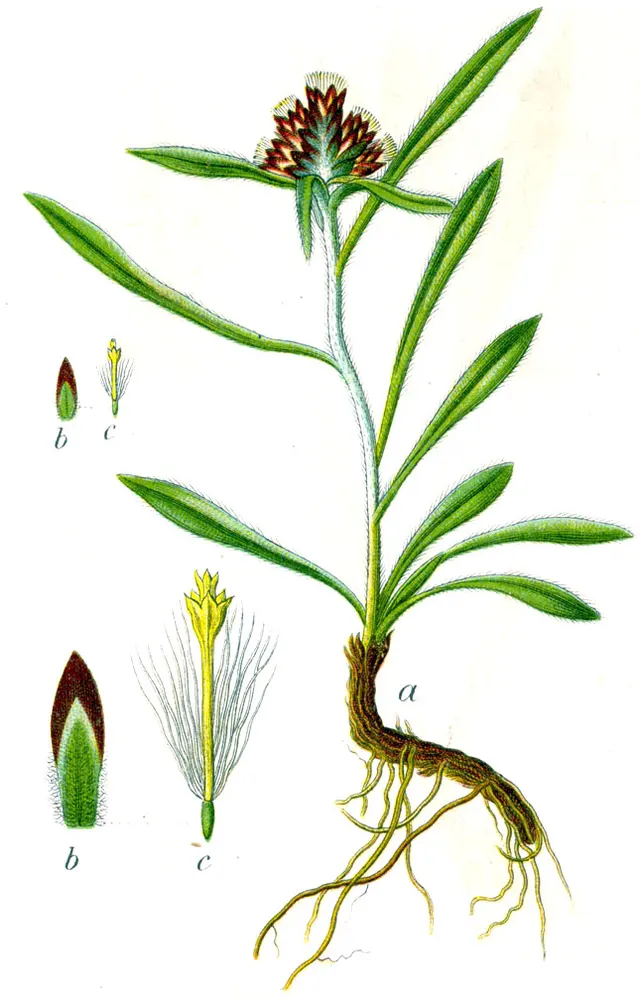
Photo: Johann Georg Sturm (Painter: Jacob Sturm), Public domain (via Wikimedia Commons)
Alpine Cudweed
Gnaphalium supinum
Also known as Dwarf Cudweed, Alpine Everlasting, Omalotheca supina (synonym)
Key benefits
✦Traditional uses
✦Alpine cudweed is a plant known far better to mountaineers and botanists than to herbalists. It grows in some of the harshest ground in Europe, tucked into gravel and rock crevices near mountain summits, and for most of its recorded history it has simply been noted, admired, and left alone rather than gathered. Its larger, lowland cousin, marsh cudweed, carries a real folk history as a gargle and wash in old European herbal tradition, but that record does not extend with any confidence to this small alpine species. What Gnaphalium supinum has instead earned is a quiet reputation among hillwalkers as one of the toughest little flowering plants they will ever step over, a woolly gray-green survivor holding its ground where almost nothing else can.
How to grow & use it
✦The full apothecary for Alpine Cudweed
Traditional remedies and step-by-step preparations, a complete growing guide, and how to harvest, dry, and store it, all unlocked with HerbLens Unlimited.
- ✦Remedies & preparations
- ✦ Growing guide
- ✦Harvest & storage
From under $6 a month. Free plant identifications always included.
- ✦Marsh cudweed (a better-documented relative, if it is the cudweed tradition you are after)
- ✦Moss campion, as a fellow cushion-forming alpine neighbor
- ✦Alpine saxifrage, another true summit dweller
- ✦Marsh cudweed (Gnaphalium/Gnaphalium uliginosum) for anyone seeking a cudweed with an actual documented folk history
“For the ones who keep climbing after the path runs out, to where only the smallest, toughest things still bother to flower.”
Alpine cudweed is recorded growing on some of the highest, most wind-battered summit plateaus in Britain and across Europe's mountain ranges, making it one of the very few flowering plants tough enough to bloom at those elevations, its dense woolly hairs acting like a built-in coat against cold, drying wind and fierce ultraviolet light.
Not documented as toxic, but it has no real history of food or medicinal use, so it isn't eaten or brewed; it also grows in fragile alpine turf that is often protected from picking.