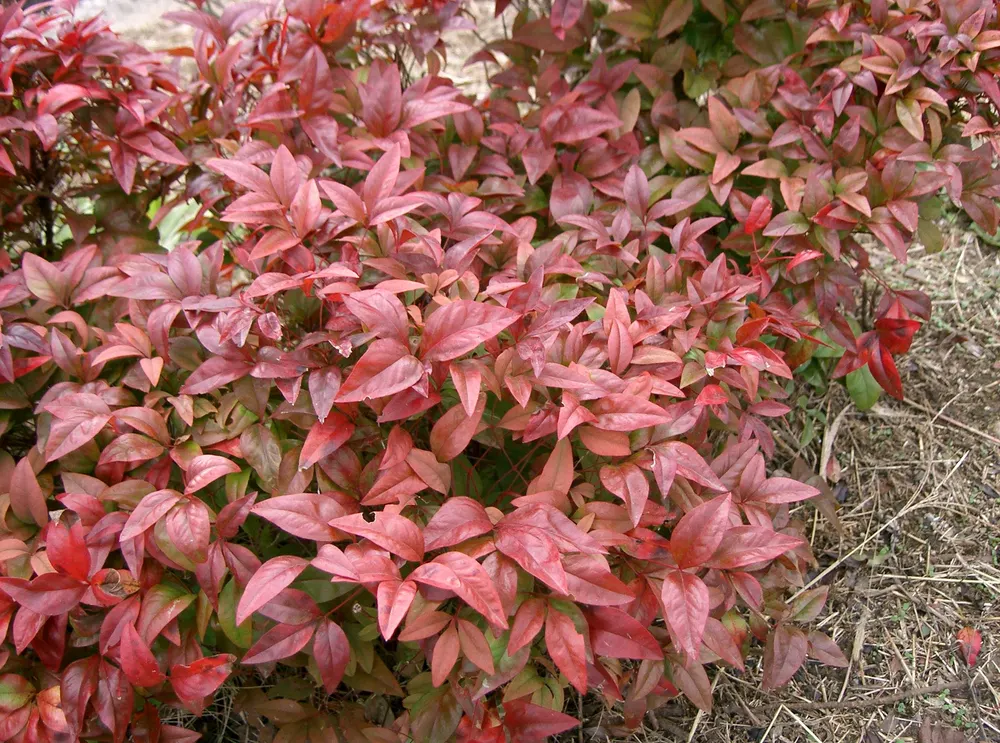
Photo: KENPEI, CC BY-SA 3.0 (via Wikimedia Commons)
Heavenly Bamboo
Nandina domestica
Also known as Sacred Bamboo, Nanten, Nandina
Key benefits
✦Traditional uses
✦Nandina domestica, called heavenly bamboo or sacred bamboo, has held a place of honor in East Asian gardens for well over a thousand years, though it is not a true bamboo at all but a distant relative of the barberries. In Japan, where it is known as nanten, the shrub was traditionally planted beside the entrance of a home, since its name echoes a phrase meaning to turn misfortune into good luck. In classical Chinese herbal tradition the ripe fruit was occasionally noted in old formulas for coughs, but this practice has largely fallen away as the plant's toxic, cyanide-producing compounds became better understood. Today Nandina is valued almost entirely as an ornamental, prized for lacy foliage that flushes crimson in cold weather and strings of scarlet berries that carry color through the darkest months.
How to grow & use it
✦The full apothecary for Heavenly Bamboo
Traditional remedies and step-by-step preparations, a complete growing guide, and how to harvest, dry, and store it, all unlocked with HerbLens Unlimited.
- ✦Remedies & preparations
- ✦ Growing guide
- ✦Harvest & storage
From under $6 a month. Free plant identifications always included.
- ✦Camellia
- ✦Japanese maple
- ✦Mondo grass
- ✦Dwarf, non-fruiting Nandina cultivars
- ✦Virginia sweetspire (Itea virginica) as a non-invasive native alternative
“For a shrub that glows red against the snow and asks for almost nothing in return.”
In several US states Nandina domestica is now classed as invasive, and non-fruiting cultivars have become popular for good reason: wild birds, especially cedar waxwings, have been found dead after gorging on the berries in late winter, when the cyanide-producing compounds inside them are most concentrated.
All parts of Nandina domestica, particularly the berries and leaves, contain compounds that release cyanide when metabolized, and the plant is documented to be toxic to cats, dogs, livestock, and grazing animals. Berry ingestion has also been linked to deaths in cedar waxwings and other birds during hard winters. It is not considered safe for human consumption and has no established internal use in modern herbal practice. Keep berries, clippings, and prunings well away from children, pets, and livestock, and consider a non-fruiting cultivar if animals roam your garden. If ingestion by a person, pet, or animal is ever suspected, contact a physician, veterinarian, or poison control center immediately rather than attempting any home remedy.