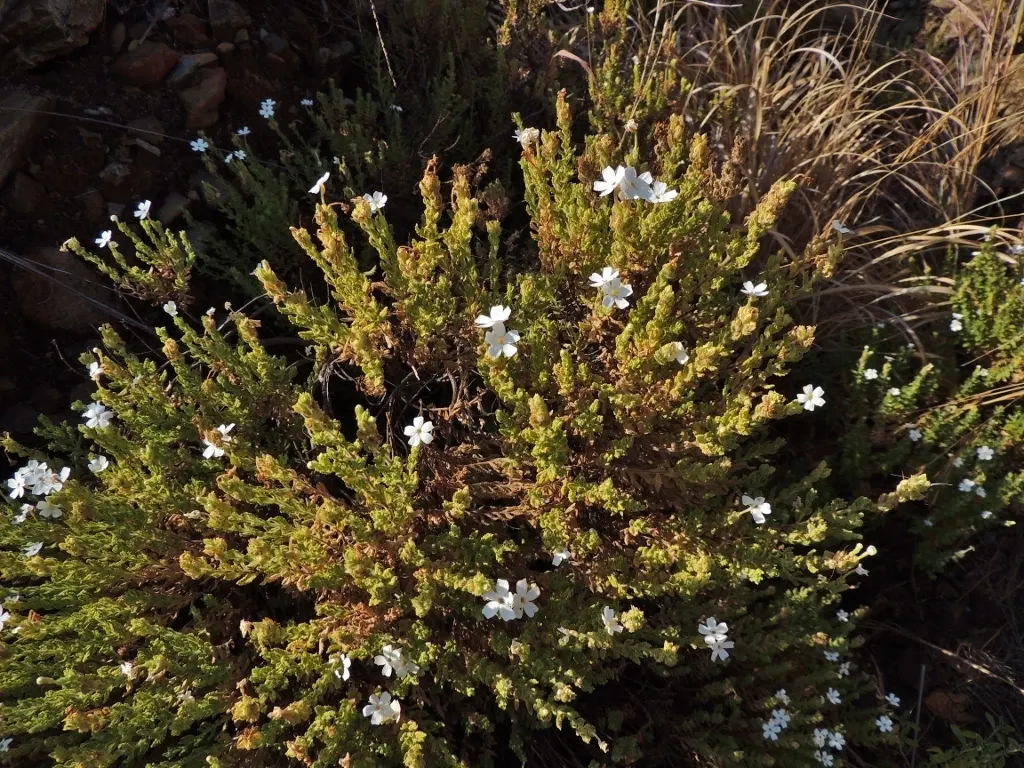
Photo: (c) i_c_riddell, CC BY (via iNaturalist)
Great Dyke Jamesbrittenia
Jamesbrittenia fodina
Also known as Sutera fodina (basionym, its original scientific name before reclassification)
Key benefits
✦Traditional uses
✦Jamesbrittenia fodina carries no known history in traditional herbal medicine, and no historic remedies have been recorded for it. What it does carry is a small, quiet story of place. Its epithet, fodina, is Latin for mine, given because this little subshrub makes its home on the mineral-rich serpentine soils of Zimbabwe's Great Dyke, a long, narrow geological ridge threaded with chromite and other ore bodies, and the plant is often found colonizing the disturbed ground along old mining tracks and roadsides. Botanists and chemists have since taken an interest in it for its unusual iridoid compounds, but that is a story of the laboratory, not the hearth. This entry exists to record it honestly, as a genuine botanical rarity rather than a folk remedy.
How to grow & use it
✦The full apothecary for Great Dyke Jamesbrittenia
Traditional remedies and step-by-step preparations, a complete growing guide, and how to harvest, dry, and store it, all unlocked with HerbLens Unlimited.
- ✦Remedies & preparations
- ✦ Growing guide
- ✦Harvest & storage
From under $6 a month. Free plant identifications always included.
The Great Dyke, the geological formation Jamesbrittenia fodina calls home, is one of the largest layered igneous intrusions on Earth, stretching about 550 km through the middle of Zimbabwe, and its serpentine soils are so mineral-heavy and inhospitable that only a small, specially adapted community of plants can survive there, this little subshrub among them.
This plant grows on soils naturally rich in heavy metals, so wild specimens should not be gathered for eating since they can accumulate chromium and nickel.