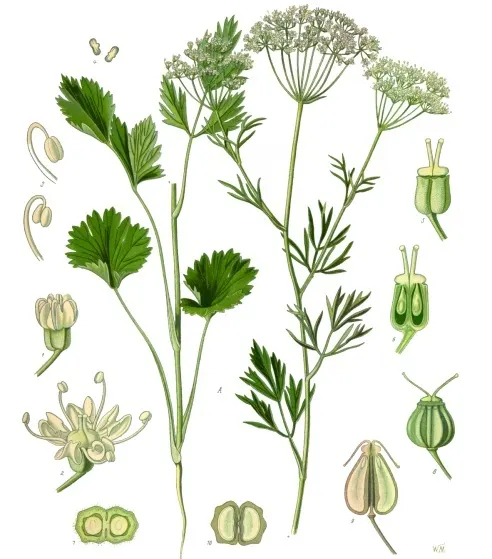
Photo: Franz Eugen Köhler, Köhler's Medizinal-Pflanzen, Public domain (via Wikimedia Commons)
Anise
Pimpinella anisum
Also known as Aniseed, Sweet Cumin, Anix
Key benefits
✦Traditional uses
✦Anise has perfumed kitchens and medicine chests since antiquity, prized by the Egyptians, Greeks, and Romans alike for its warm, licorice-sweet seed. Roman feasts often closed with a spiced anise cake called mustaceum, eaten to settle the stomach after a heavy meal, a custom that food historians point to as an ancestor of the modern wedding cake. Across generations of home herbalism, the crushed seed has been steeped into tea to ease a fussy digestion, calm a lingering cough, and sweeten the breath after a meal of strong flavors. Nursing mothers in many traditional cultures also turned to anise seed, believing it encouraged a healthy milk supply.
How to grow & use it
✦The full apothecary for Anise
Traditional remedies and step-by-step preparations, a complete growing guide, and how to harvest, dry, and store it, all unlocked with HerbLens Unlimited.
- ✦Remedies & preparations
- ✦ Growing guide
- ✦Harvest & storage
From under $6 a month. Free plant identifications always included.
- ✦Fennel
- ✦Licorice root
- ✦Chamomile
- ✦Fennel seed
- ✦Star anise (a different plant, but a close flavor match)
“When a heavy meal, a tight chest, or a restless evening calls for something gentle, sweet, and warming.”
The distinctive sweetness of anise comes from a compound called anethole, the very same one that gives fennel and star anise their similar licorice-like flavor, even though all three plants belong to entirely different botanical families.
Anise is safe as a culinary spice, though those allergic to fennel, celery, or carrot should watch for cross-reactivity. Its mild estrogen-like activity means concentrated anise oil or medicinal amounts are best avoided during pregnancy, breastfeeding, or in infants.