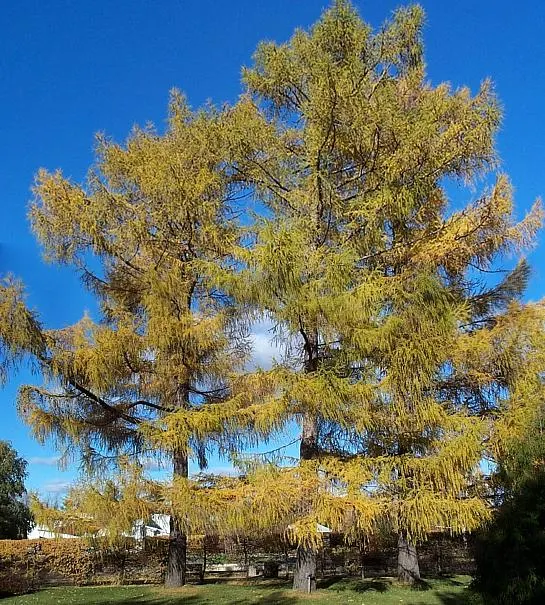
Photo: Montréalais, CC BY-SA 3.0 (via Wikimedia Commons)
Siberian Larch
Larix sibirica
Also known as Siberian Larch, Russian Larch, Sibirische Lärche
Key benefits
✦Traditional uses
✦For generations, Siberian peoples living along the edge of the taiga tapped the trunk of the larch for its fragrant, honey-colored resin, prizing it as a wound dressing and chest rub through the long, hard winters. The soft inner bark and young shoots were simmered into a warming tea to ease coughs and support the body through cold season. In more recent times, the wood of Larix sibirica became famous as the source of arabinogalactan, a fiber-like compound now studied for its traditional role in supporting the immune system, carrying forward knowledge that Siberian herbalists understood long before it had a name.
How to grow & use it
✦The full apothecary for Siberian Larch
Traditional remedies and step-by-step preparations, a complete growing guide, and how to harvest, dry, and store it, all unlocked with HerbLens Unlimited.
- ✦Remedies & preparations
- ✦ Growing guide
- ✦Harvest & storage
From under $6 a month. Free plant identifications always included.
- ✦Pine needle
- ✦Elderberry
- ✦Rosehip
- ✦Spruce tip
- ✦Pine needle
“For the long, cold season, when you want the golden-needled sentinel of the northern forest quietly standing watch beside you.”
Unlike most conifers, the Siberian larch is deciduous. Every autumn its needles turn a brilliant gold before dropping entirely, leaving the tree bare all winter, a rare trick among cone-bearing trees that helps it survive Siberia's brutal cold.
Siberian larch is a food-safe conifer, though raw resin can irritate skin or trigger a reaction in those sensitive to pine or fir resins and should not be swallowed. Concentrated extracts have not been well studied in pregnancy or breastfeeding.