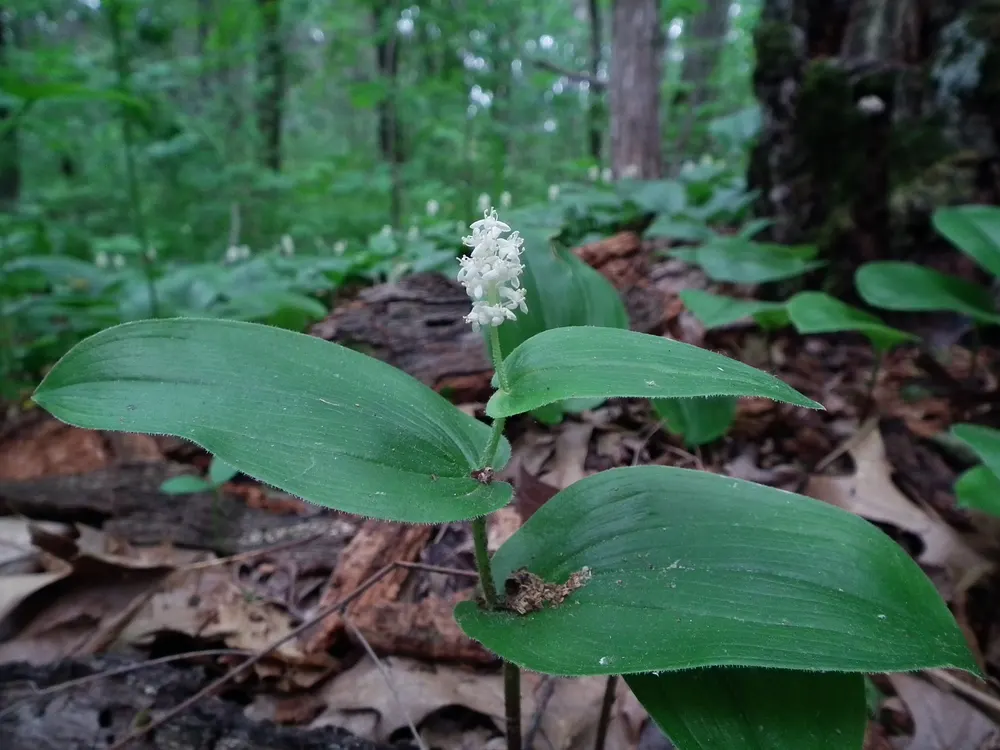
Photo: BlueCanoe, CC BY-SA 3.0 (via Wikimedia Commons)
Canada Mayflower
Maianthemum canadense
Also known as Canada Mayflower, False Lily of the Valley, Wild Lily-of-the-Valley, Two-Leaved Solomon's Seal (informal), Bead Ruby
Key benefits
✦Traditional uses
✦Canada mayflower carpets the floor of northern forests so completely that early botanists sometimes called it the commonest wildflower in the woods, a plant most people walk past without ever learning its name. A handful of Native American nations, including the Ojibwe and Iroquois, recorded small, specific uses of its leaves and root in the ethnobotanical record, such as easing headaches or treating minor wounds, though these were narrow, local practices rather than a widely established herbal tradition. Today the plant is valued far more as a woodland groundcover and a quiet food source for grouse, mice, and songbirds than as a home remedy, and it has never held the kind of broad, well-documented internal use that would support a modern preparation.
How to grow & use it
✦The full apothecary for Canada Mayflower
Traditional remedies and step-by-step preparations, a complete growing guide, and how to harvest, dry, and store it, all unlocked with HerbLens Unlimited.
- ✦Remedies & preparations
- ✦ Growing guide
- ✦Harvest & storage
From under $6 a month. Free plant identifications always included.
- ✦Wild ginger
- ✦Foamflower
- ✦Ferns
- ✦Wild ginger (Asarum canadense)
- ✦Partridgeberry
“For carpeting a shaded corner in soft green leaves and a scatter of starlight blooms.”
A single Canada mayflower colony often begins as one plant that spreads underground for decades, so the tidy carpet of starry white blooms you see in a spring forest may all be genetically the same individual.
Canada mayflower's red berries are mildly toxic and can cause nausea, vomiting, or stomach upset if eaten, so leave them for the birds rather than people or pets.