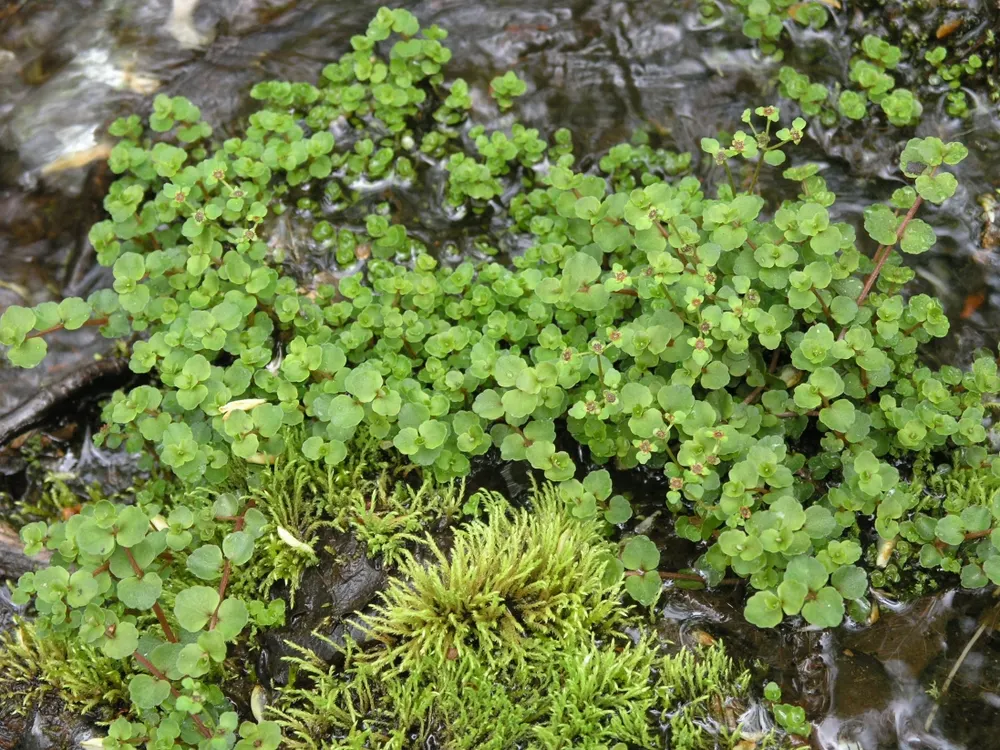
Photo: Richtid, CC BY-SA 3.0 (via Wikimedia Commons)
American Golden Saxifrage
Chrysosplenium americanum
Also known as Golden Saxifrage, Water Carpet, Water Mat
Key benefits
✦Traditional uses
✦American golden saxifrage does not carry the kind of kitchen or medicine chest history that fills most pages of this atlas. It has always been valued differently, as a small, glowing sign that the water nearby is cold, clean, and constantly moving. Naturalists and foragers of the northeastern woods have long used its bright mats as a marker of healthy seep and spring habitat, a plant that only settles in where the water itself is trustworthy. Its story, in other words, belongs more to the tradition of careful woods walking than to the apothecary shelf.
How to grow & use it
✦The full apothecary for American Golden Saxifrage
Traditional remedies and step-by-step preparations, a complete growing guide, and how to harvest, dry, and store it, all unlocked with HerbLens Unlimited.
- ✦Remedies & preparations
- ✦ Growing guide
- ✦Harvest & storage
From under $6 a month. Free plant identifications always included.
- ✦Marsh marigold
- ✦Ferns
- ✦Native mosses
- ✦Golden ragwort
- ✦Foamflower
The genus name Chrysosplenium comes from the Greek chrysos, gold, and splen, spleen. Old World herbalists gave the name to a European cousin of this plant, Chrysosplenium oppositifolium, which they once used for spleen complaints under the old doctrine that a plant's look pointed to its cure. The American species inherited the golden name, but never the medicinal reputation.
American golden saxifrage isn't known to be toxic, but it also has no history of use as a food or medicine, so there's no established safe way to prepare or eat it.