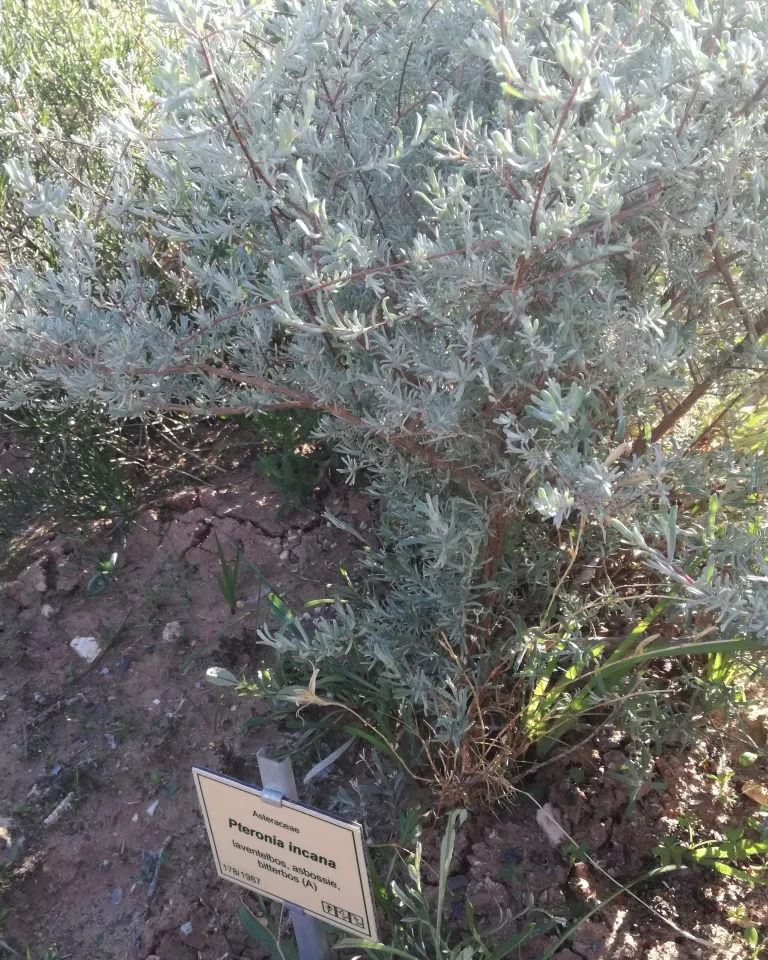
Photo: Abu Shawka, CC BY-SA 4.0 (via Wikimedia Commons)
Blue Bush
Pteronia incana
Also known as Vaalbos, Gansiebos, Karoo Blue Bush
Key benefits
✦Traditional uses
✦Pteronia incana, known across the Karoo as blue bush, is better known to farmers, ecologists, and rangeland scientists than to herbalists. Its silvery grey, resin-scented foliage has long been a familiar sight on South African sheep and goat farms, where its spread across a paddock was read by generations of stockmen as a quiet signal that the land had been grazed hard and needed rest. Reliable, well-documented records of it being used as a home remedy or medicinal herb are thin, so rather than guess at uses that were never clearly recorded, this entry focuses on what is confidently known: its identity, its ecology, and its character as a tough, good-looking garden shrub. In keeping with a commitment to accuracy over invention, no herbal preparations are offered for this species.
How to grow & use it
✦The full apothecary for Blue Bush
Traditional remedies and step-by-step preparations, a complete growing guide, and how to harvest, dry, and store it, all unlocked with HerbLens Unlimited.
- ✦Remedies & preparations
- ✦ Growing guide
- ✦Harvest & storage
From under $6 a month. Free plant identifications always included.
“For the gardener who wants a piece of the wild Karoo, silvery, aromatic, and unbothered by drought.”
Rangeland ecologists in South Africa use blue bush as a living gauge of grazing pressure. Because it thickens and spreads on land that has been overgrazed, a hillside dense with it is quietly telling the story of how that ground has been treated in recent years.
There's no reliable record of Pteronia incana being used as a food, tea, or medicine, and its safety for internal use hasn't been established. It shouldn't be eaten, brewed, or used as a remedy on the strength of tradition alone.