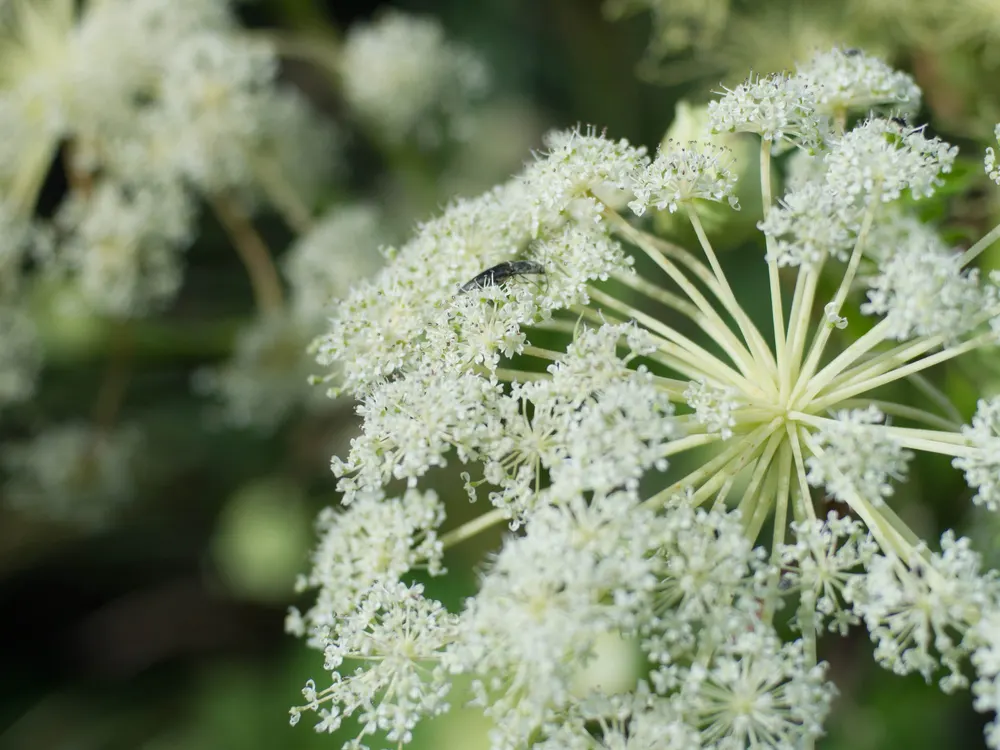
Photo: Alicia-C, CC BY 2.0 (via Wikimedia Commons)
Dahurian Angelica
Angelica dahurica
Also known as Bai Zhi, Chinese Angelica, Bai Ji, Fragrant Angelica
Key benefits
✦Traditional uses
✦Known in traditional Chinese medicine as Bai Zhi, meaning white root, this herb has been counted among the essential materia medica for nearly two thousand years, first recorded in texts like the Shennong Bencao Jing. Practitioners traditionally reached for it to clear frontal headaches, stuffy sinuses, and toothache, and to address the kind of dull, damp heaviness that settles behind the eyes and across the forehead. Just as often, it found its way into face powders and washes, prized for centuries as a beauty root said to brighten the complexion and soften blemishes. It remains one of the most recognizable roots on any traditional apothecary shelf, its pale, fragrant slices instantly familiar to anyone who has browsed a Chinese herb shop.
How to grow & use it
✦The full apothecary for Dahurian Angelica
Traditional remedies and step-by-step preparations, a complete growing guide, and how to harvest, dry, and store it, all unlocked with HerbLens Unlimited.
- ✦Remedies & preparations
- ✦ Growing guide
- ✦Harvest & storage
From under $6 a month. Free plant identifications always included.
- ✦Saposhnikovia (Fang Feng)
- ✦Ligusticum (Chuan Xiong)
- ✦Magnolia flower (Xin Yi Hua)
- ✦Angelica archangelica (Garden Angelica)
- ✦Angelica sinensis (Dong Quai)
“When a damp fog settles behind the eyes and the nose simply will not clear.”
Bai Zhi is one of the fifty fundamental herbs of traditional Chinese medicine, a shortlist so central that generations of apprentice herbalists were expected to memorize it before touching anything else on the shelf.
The root contains furanocoumarins that can make skin much more sensitive to sunlight, so avoid sun exposure after topical use, and it may affect blood clotting, so use caution with blood-thinning medication. It has traditionally been avoided during pregnancy. As a carrot-family plant with dangerously toxic look-alikes like poison hemlock and water hemlock, use only root from a properly identified source, never casually foraged.