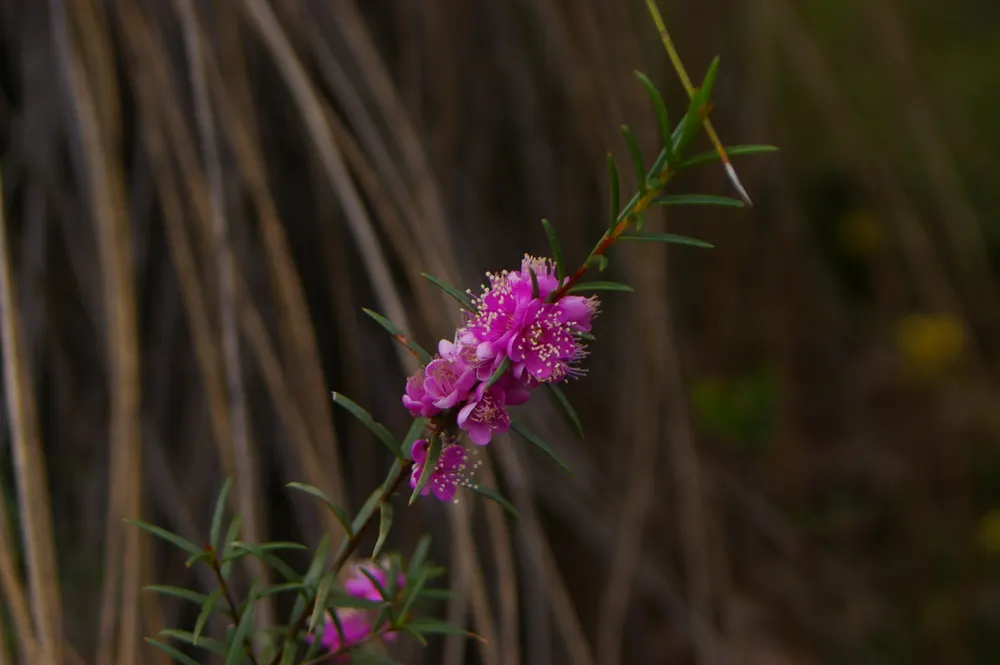
Photo: Gnangarra, CC BY 3.0 au (via Wikimedia Commons)
Swan River Myrtle
Hypocalymma robustum
Also known as Swan River Myrtle
Key benefits
✦Traditional uses
✦Swan River myrtle carries a horticultural story rather than a medicinal one. It was collected and described by early European botanists exploring the sandplains around the Swan River in Western Australia in the nineteenth century, and it quickly found its way into gardens for the simple reason that few shrubs bloom so generously so early in the season. Nurseries in Australia and, later, in mild-climate gardens abroad have grown it ever since for cut flowers and hedging, prized for its wiry, small-leaved form and its haze of pink blossom rather than for any tradition of tea, tincture, or kitchen use. It has no established folk-medicine history the way many older-world herbs do, so its story is really the story of a garden favorite rather than an apothecary staple.
How to grow & use it
✦The full apothecary for Swan River Myrtle
Traditional remedies and step-by-step preparations, a complete growing guide, and how to harvest, dry, and store it, all unlocked with HerbLens Unlimited.
- ✦Remedies & preparations
- ✦ Growing guide
- ✦Harvest & storage
From under $6 a month. Free plant identifications always included.
- ✦Kangaroo paw (Anigozanthos)
- ✦Grevillea
- ✦Boronia
- ✦Thryptomene (another fine-leaved Myrtaceae shrub with a similar airy, small-flowered look)
“For a drift of soft pink that lights up a dry, sandy garden before almost anything else has thought about blooming.”
The genus name Hypocalymma comes from the Greek hypo, meaning under, and kalymma, meaning a veil or covering. It refers to the little cap that shields the flower bud before it splits open to bloom, the same calyptra trick used by its famous cousin, the eucalyptus.
Swan River myrtle is grown as an ornamental and has no history of use as food or medicine, so it should not be eaten or brewed.