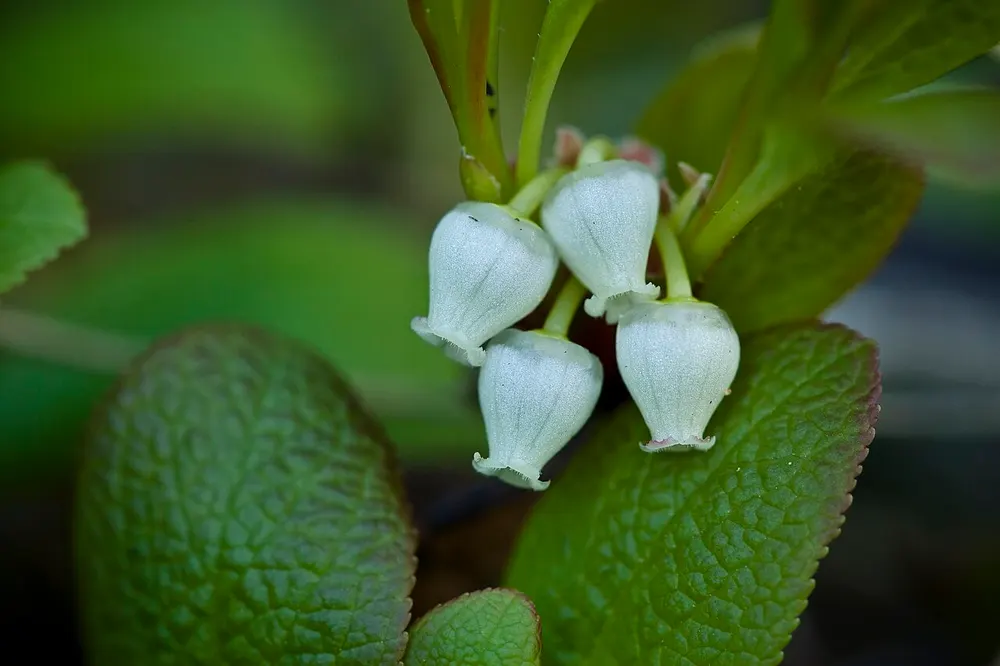
Photo: NPS / Jacob W. Frank: Denali National Park and Preserve, Public domain (via Wikimedia Commons)
Red Bearberry
Arctostaphylos rubra
Also known as Alpine Bearberry, Red-Fruit Bearberry, Arctic Bearberry
Key benefits
✦Traditional uses
✦Red bearberry has long been gathered by Alaska Native and other circumpolar peoples, close kin to the better known common bearberry, or kinnikinnick, that grows farther south. Its leaves were traditionally steeped into a mild, astringent tea used to ease water infections and settle the kidneys, much as its cousin uva-ursi has been used for generations. The tart berries, sweeter after the first frost, were eaten fresh, dried for winter stores, or mashed with fat into a traveling food. Because it thrives where few other plants can, red bearberry earned a quiet trust among the people who depended on the tundra's short growing season.
How to grow & use it
✦The full apothecary for Red Bearberry
Traditional remedies and step-by-step preparations, a complete growing guide, and how to harvest, dry, and store it, all unlocked with HerbLens Unlimited.
- ✦Remedies & preparations
- ✦ Growing guide
- ✦Harvest & storage
From under $6 a month. Free plant identifications always included.
- ✦Common bearberry (uva-ursi)
- ✦Cranberry leaf
- ✦Juniper berry
- ✦Common bearberry (Arctostaphylos uva-ursi)
- ✦Cranberry leaf
“For the short, blazing turn of the tundra, when the leaves burn red and the old northern remedies are called for.”
The genus name Arctostaphylos comes from the Greek for bear and grape clusters, a nod to how eagerly grizzly and brown bears seek out the berries each fall, while the species name rubra celebrates the plant's brilliant red autumn foliage, one of the first fires of color to sweep across the tundra before snow returns.
Leaves contain arbutin and shouldn't be used long-term or in high doses; avoid during pregnancy, breastfeeding, or with kidney disease.