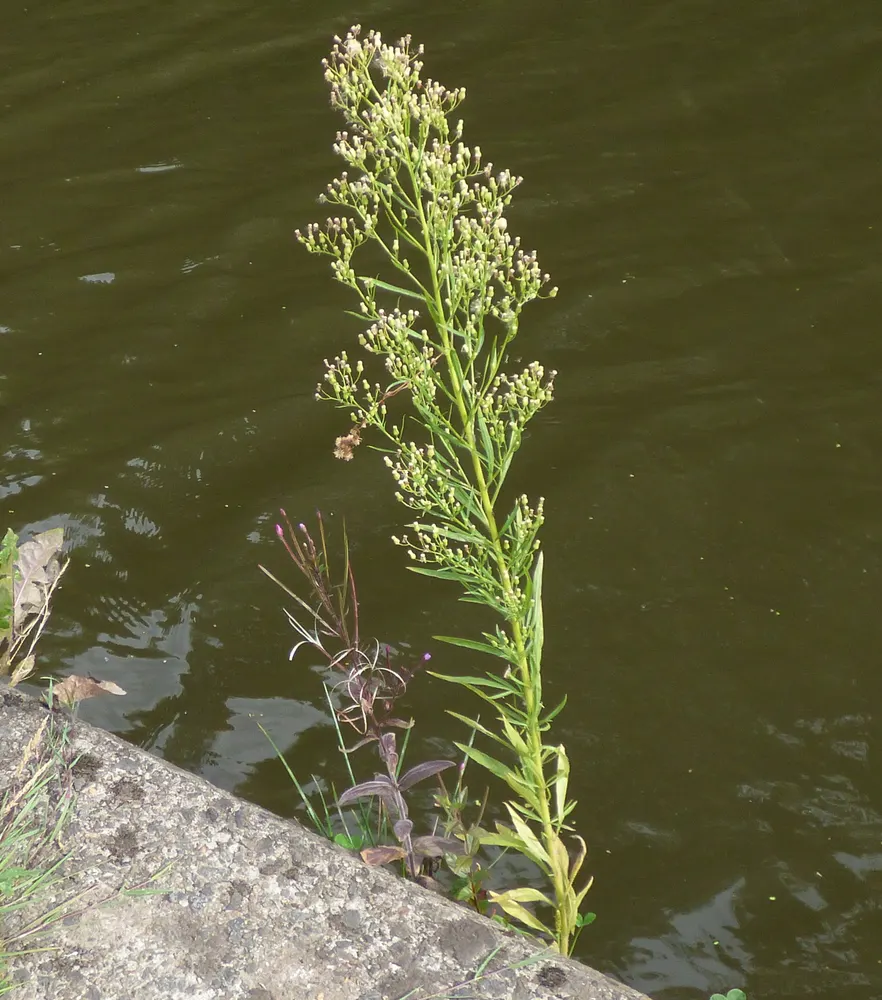
Photo: Meteorquake, CC BY 4.0 (via Wikimedia Commons)
Canadian Fleabane
Erigeron canadensis
Also known as Horseweed, Marestail, Butterweed, Canadian Horseweed, Coltstail
Key benefits
✦Traditional uses
✦Long before it was dismissed as a roadside weed, Canadian fleabane was gathered by numerous Native American nations, including the Cherokee, Iroquois, and Chippewa, who steeped its leaves for digestive upset, dysentery, and diarrhea. Early American physicians and eclectic herbalists later adopted it too, listing it in nineteenth century materia medica as an astringent and diuretic. Its tough, weedy nature made it one of the most reachable herbs a household could gather, no garden required, just a walk down the lane. Even its old country names, horseweed and marestail, hint at how ordinary and familiar this plant once was to rural life.
How to grow & use it
✦The full apothecary for Canadian Fleabane
Traditional remedies and step-by-step preparations, a complete growing guide, and how to harvest, dry, and store it, all unlocked with HerbLens Unlimited.
- ✦Remedies & preparations
- ✦ Growing guide
- ✦Harvest & storage
From under $6 a month. Free plant identifications always included.
- ✦Peppermint
- ✦Chamomile
- ✦Blackberry root
- ✦Plantain leaf
- ✦Yarrow
“For the humble weed that quietly settled a queasy stomach long before the herb shop existed.”
Canadian fleabane is thought to be one of the very first weeds to have crossed the Atlantic in the opposite direction of most plant trade, traveling from North America to Europe as early as the 1600s, likely tangled in ship ballast or stuffed taxidermy, and it now grows wild on nearly every continent.
The concentrated essential oil from this plant is potent and was historically misused as an abortifacient, so it should never be ingested and should be avoided in pregnancy. As a ragweed relative, the plant can trigger allergic reactions in sensitive people, so only the mild dried leaf tea is used, and sparingly.