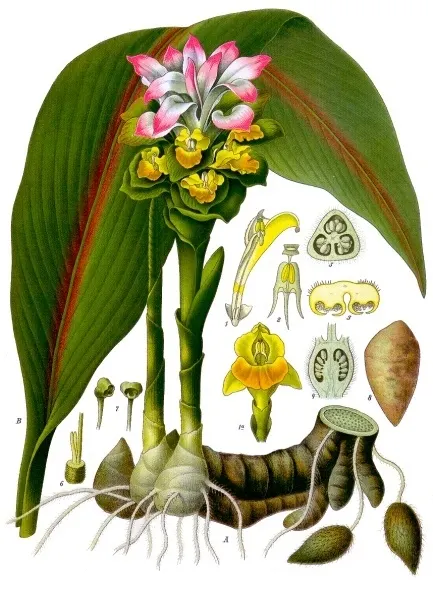
Photo: Franz Eugen Köhler, Köhler's Medizinal-Pflanzen, Public domain (via Wikimedia Commons)
Zedoary
Curcuma zedoaria
Also known as White Turmeric, Kachura, Temu Putih, Shoti
Key benefits
✦Traditional uses
✦Zedoary has long stood in the shadow of its more famous cousin, turmeric, yet for centuries it held its own place in the medicine chests of India, China, and the Indonesian archipelago. Ayurvedic and Unani healers reached for the dried, camphor-scented rhizome as a bitter digestive tonic, brewing it to settle a heavy stomach after a rich meal. In Java and Bali, the fresh root was pounded into pastes for the skin, especially in the elaborate herbal rituals prepared for brides before their wedding day. European apothecaries of the spice-trade era knew it too, importing dried zedoary root to flavor bitters and settle queasy travelers long before the modern supplement aisle existed.
How to grow & use it
✦The full apothecary for Zedoary
Traditional remedies and step-by-step preparations, a complete growing guide, and how to harvest, dry, and store it, all unlocked with HerbLens Unlimited.
- ✦Remedies & preparations
- ✦ Growing guide
- ✦Harvest & storage
From under $6 a month. Free plant identifications always included.
- ✦Ginger
- ✦Turmeric
- ✦Black Pepper
- ✦Turmeric
- ✦Ginger
“For the sluggish, heavy feeling that settles in after a big meal.”
Zedoary was once such a prized spice-trade commodity that medieval European apothecaries stocked it as a stomach remedy centuries before turmeric, its now far more famous relative, became a household name.
Zedoary may mildly thin the blood, so avoid it with anticoagulant or antiplatelet medication and before surgery. It is traditionally avoided in pregnancy, since it is associated with stimulating menstrual flow.