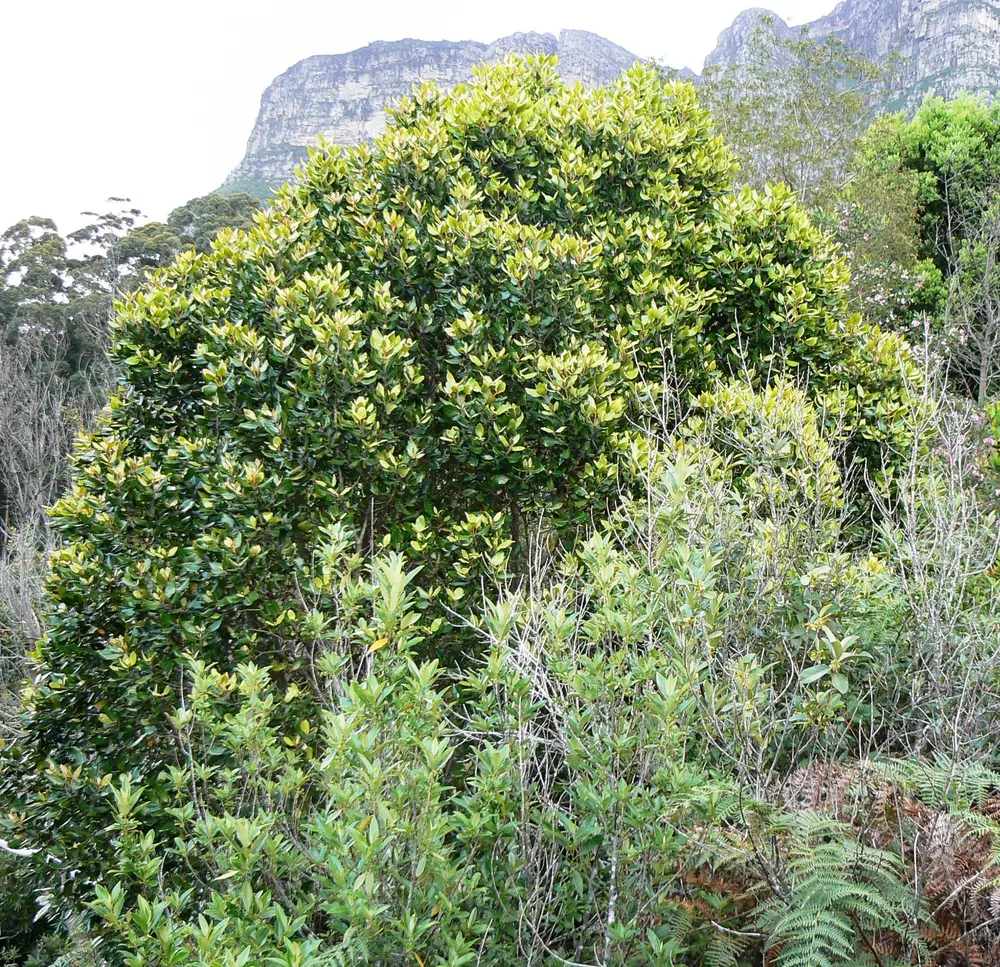
Photo: Abu Shawka, Public domain (via Wikimedia Commons)
Assegai Tree
Curtisia dentata
Also known as Assegai, umLahleni (Zulu), Assegaaihout (Afrikaans)
Key benefits
✦Traditional uses
✦Deep in the Afromontane forests of southern Africa, the Assegai tree grew tall, straight, and dense grained enough that warriors and craftsmen sought its pale timber above nearly all others for the shafts of assegais, the iconic throwing and stabbing spears that gave the tree its lasting name. Beyond weaponry, its bark found a quieter role in traditional Southern African healing, where it was prepared as a decoction for digestive complaints and used as a purgative meant to cleanse the system. The same hard, close grained wood was fashioned into tool handles, wagon parts, and furniture, valued wherever durability mattered more than ease of carving. Today the Assegai is remembered as much for what it gave to everyday survival, tools, weapons, and shelter, as for anything gathered from its branches.
How to grow & use it
✦The full apothecary for Assegai Tree
Traditional remedies and step-by-step preparations, a complete growing guide, and how to harvest, dry, and store it, all unlocked with HerbLens Unlimited.
- ✦Remedies & preparations
- ✦ Growing guide
- ✦Harvest & storage
From under $6 a month. Free plant identifications always included.
- ✦Pepper-bark tree (Warburgia salutaris)
- ✦Cape chestnut (Calodendrum capense)
- ✦Pepper-bark tree (Warburgia salutaris)
“For the tree whose timber once armed a warrior and whose bark once eased a healer's patient.”
The tree takes its common name directly from the assegai, the short stabbing spear associated with Zulu warriors, because its exceptionally hard, straight grained wood was the traditional choice for spear shafts.
The bark has traditionally been used in Southern African folk medicine as a strong purgative and emetic, and unsupervised use can cause significant gastrointestinal upset. The species is increasingly rare because trees are stripped or felled for bark and timber, so it's protected in some areas and wild harvest should be avoided in favor of sustainably cultivated stock.