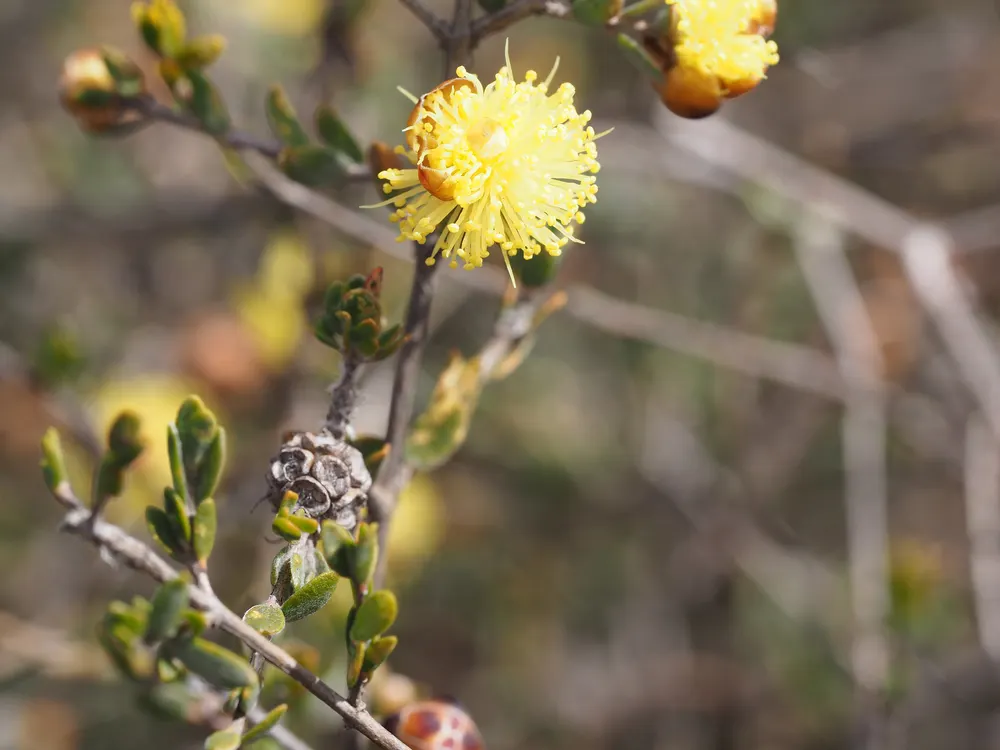
Photo: Geoff Derrin, CC BY-SA 4.0 (via Wikimedia Commons)
Golden Cone-myrtle
Conothamnus aureus
Also known as Golden Conothamnus, Trichobasis aurea (historic name)
Traditional uses
✦Conothamnus aureus is one of those quiet corners of the botanical world that has never made it into the kitchen garden or the medicine chest. It grows wild and largely unbothered along the sandplains of Western Australia's south coast, its golden flower heads opening for a few months each spring without much notice from anyone but the bees and the botanists. No documented tradition of medicinal, culinary, or ceremonial use has survived for this species, and honest herbal reference resists inventing one. Its story, for now, is simply the story of a small, tenacious plant holding its ground in some of the harshest, sandiest soil on the continent.
How to grow & use it
✦The full apothecary for Golden Cone-myrtle
Traditional remedies and step-by-step preparations, a complete growing guide, and how to harvest, dry, and store it, all unlocked with HerbLens Unlimited.
- ✦Remedies & preparations
- ✦ Growing guide
- ✦Harvest & storage
From under $6 a month. Free plant identifications always included.
“For the small, gold-headed wildflower that keeps its secrets, holding fast in the sandplains where little else chooses to grow.”
The genus name Conothamnus comes from the Greek konos, meaning cone, and thamnos, meaning shrub, a nod to the tight, cone-like flower heads. This particular species was first described in 1852 by the Russian botanist Nikolai Turczaninow, who called it Trichobasis aurea, before the Czech botanist Karel Domin moved it into Conothamnus in 1923. Its golden flower heads are also unusual among its two close relatives because they lack petals entirely, the color and shape coming instead from a cluster of golden stamens.
This plant has no documented use as food or medicine, so treat it as an unstudied wild native rather than something to eat or apply to the skin. Many Western Australian native plants are protected in the wild, so foraging may require a permit.