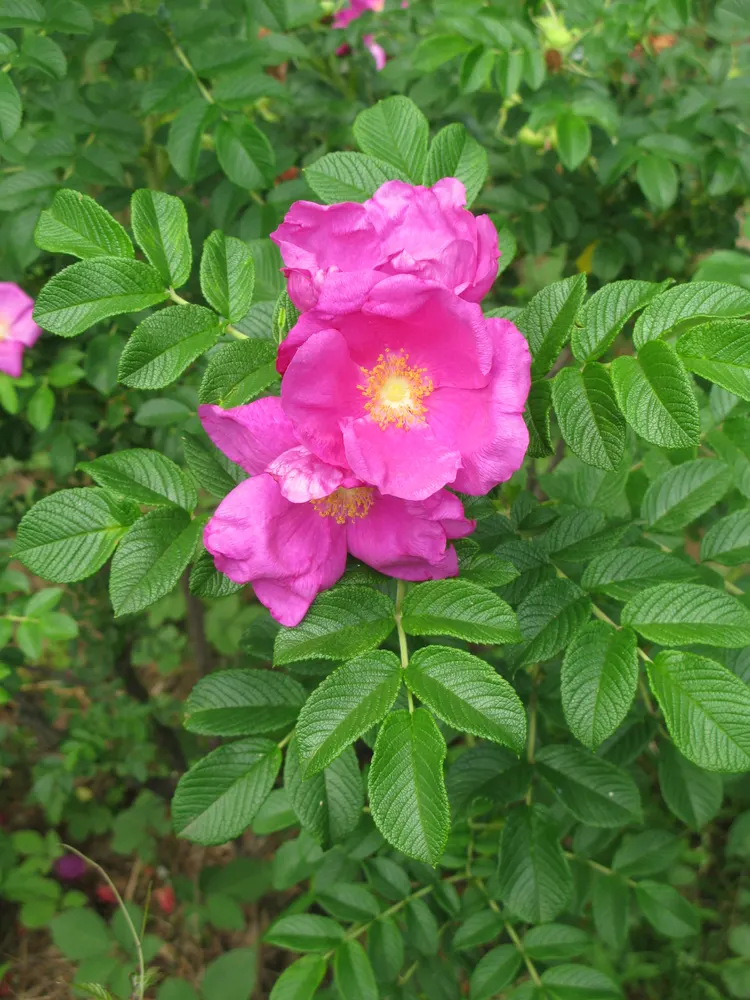
Photo: Qwert1234, CC BY-SA 3.0 (via Wikimedia Commons)
Rugosa Rose
Rosa rugosa
Also known as Beach Rose, Japanese Rose, Ramanas Rose, Saltspray Rose
Key benefits
✦Traditional uses
✦Rosa rugosa is native to the windswept coastlines of Japan, Korea, and northern China, where it has long been prized for its plump, tomato-shaped hips, bursting with vitamin C once the petals fall away. Coastal communities across Asia dried the petals for fragrant tea and simmered the hips into syrups and preserves to carry them through the cold months. In Traditional Chinese Medicine, the flower buds, known as mei gui hua, have traditionally been used to ease digestive discomfort and to soothe a restless spirit. When the rose reached European gardens in the 1800s, its hips quickly became a wartime staple in Britain, gathered by the basketful as a homegrown stand-in for citrus when imports ran short.
How to grow & use it
✦The full apothecary for Rugosa Rose
Traditional remedies and step-by-step preparations, a complete growing guide, and how to harvest, dry, and store it, all unlocked with HerbLens Unlimited.
- ✦Remedies & preparations
- ✦ Growing guide
- ✦Harvest & storage
From under $6 a month. Free plant identifications always included.
- ✦Hibiscus
- ✦Elderberry
- ✦Mint
- ✦Dog rose (Rosa canina)
- ✦Hibiscus
“For a bright, briny bloom that thrives where little else will, and hips that carry summer's sweetness all the way into winter.”
The name rugosa means wrinkled in Latin, describing the deeply veined, quilted texture of the leaves, a trait that also happens to make this rose remarkably resistant to disease and salt-laden coastal wind.
Rose hips must be halved and their fine seed hairs scraped out before eating, since the hairs can irritate the mouth and throat. Anyone allergic to roses or other Rosaceae plants, like apples or strawberries, should use caution, and those on blood-thinning medication should be mindful of the fruit's vitamin C content.