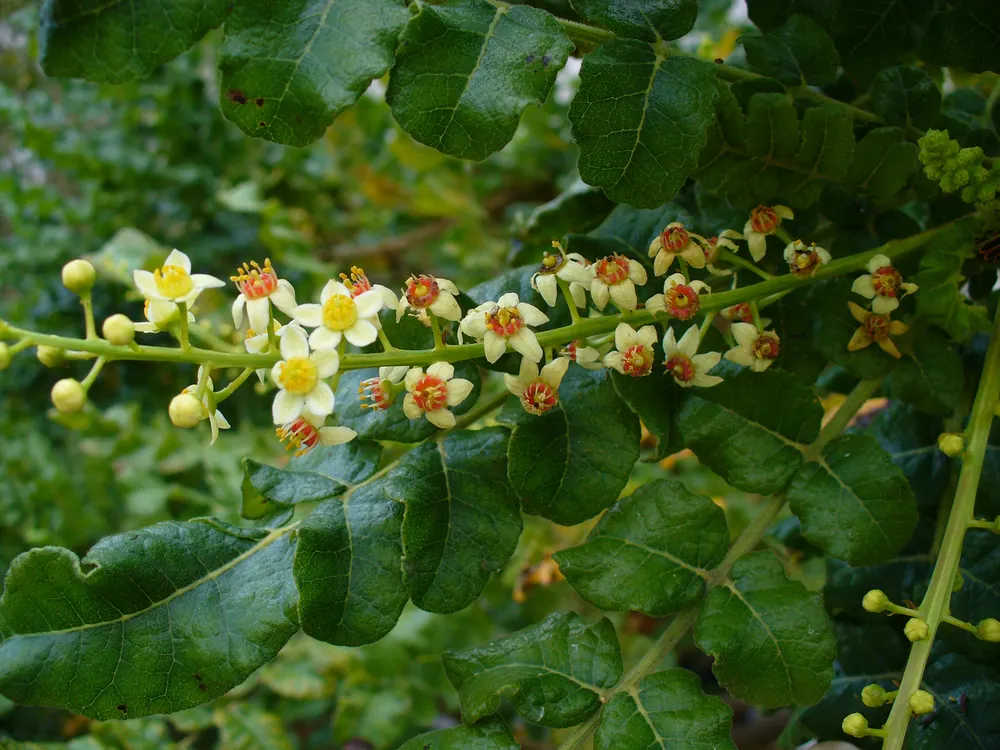
Photo: Scott Zona from USA, CC BY 2.0 (via Wikimedia Commons)
Frankincense
Boswellia sacra
Also known as Olibanum, Boswellia, Luban, Sacred Frankincense, Boswellia carterii
Key benefits
✦Traditional uses
✦For thousands of years, traders carried frankincense resin by camel caravan across the Arabian desert, and it became one of the most valuable commodities in the ancient world, worth its weight in gold in Egyptian, Greek, and Roman marketplaces. Across Arabian, East African, and Ayurvedic traditions, the tears of hardened resin were burned as incense in temples and homes, chewed for their soothing effect on the mouth and gums, and warmed into balms rubbed onto tired, aching joints. In Ayurvedic medicine, a related boswellia species, shallaki, has long held a respected place as a support for stiff and inflamed joints, and this reputation followed Boswellia sacra into modern herbalism. It remains, above all, an herb of ceremony and stillness, something people turned to when they wanted a room, a body, or a mind to settle.
How to grow & use it
✦The full apothecary for Frankincense
Traditional remedies and step-by-step preparations, a complete growing guide, and how to harvest, dry, and store it, all unlocked with HerbLens Unlimited.
- ✦Remedies & preparations
- ✦ Growing guide
- ✦Harvest & storage
From under $6 a month. Free plant identifications always included.
- ✦Myrrh
- ✦Sandalwood
- ✦Rose
- ✦Myrrh
- ✦Copal
“You want to slow a room down, and yourself along with it.”
Frankincense trees are so particular about where they grow that some of the finest resin in the world comes from trees rooted almost directly into bare limestone cliffs in Oman's Dhofar region, clinging on with barely any visible soil at all.
Frankincense essential oil is for external and aromatic use only, never taken internally or applied undiluted, as it can irritate skin. Internal use of the resin may interact with blood-thinning medications and is traditionally avoided during pregnancy.