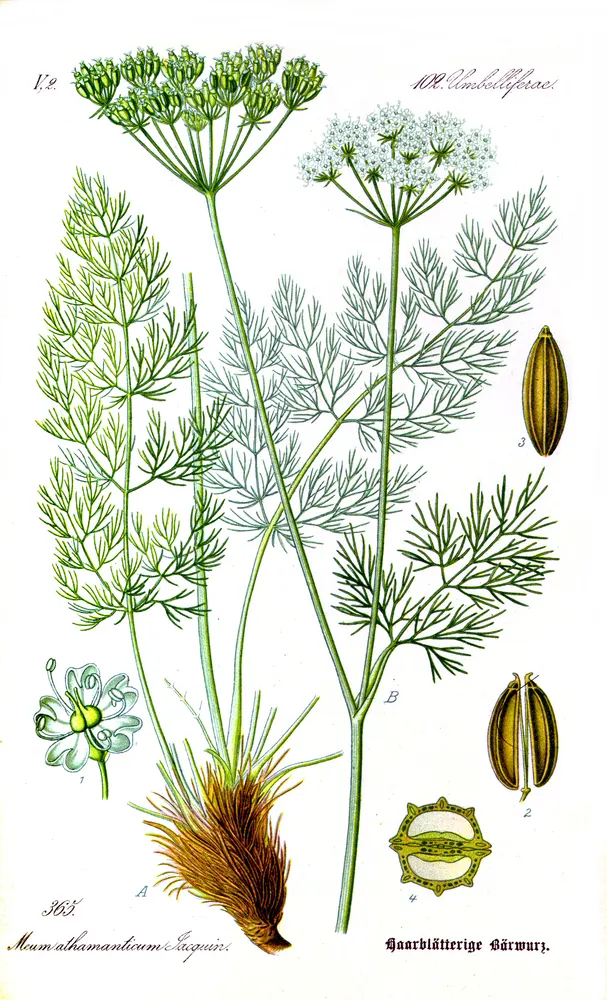
Photo: Dr. Otto Wilhelm Thomé, Public domain (via Wikimedia Commons)
Spignel
Meum athamanticum
Also known as Baldmoney, Meu, Bearwort, Spignel Meu
Key benefits
✦Traditional uses
✦Spignel has long grown wild in the high sheep pastures of Wales, Scotland, and the uplands of the Alps and Pyrenees, where its feathery, anise-scented leaves once told shepherds their flocks had reached good grazing ground. Country tradition held that the aromatic roots, when dug and dried, made a warming addition to broths and were chewed or brewed to settle a restless stomach after a heavy meal. In some upland communities, shepherds fed the roots to weak lambs in the belief it helped them thrive, which is likely how the plant earned its old name of bearwort, the root that even bears were said to seek out. Its gentle carminative reputation traveled alongside its use as a wild pot herb, a humble mountain plant valued as much for the kitchen as for the medicine chest.
How to grow & use it
✦The full apothecary for Spignel
Traditional remedies and step-by-step preparations, a complete growing guide, and how to harvest, dry, and store it, all unlocked with HerbLens Unlimited.
- ✦Remedies & preparations
- ✦ Growing guide
- ✦Harvest & storage
From under $6 a month. Free plant identifications always included.
- ✦Fennel
- ✦Caraway
- ✦Lovage
- ✦Lovage
- ✦Sweet cicely
“For the scent of high mountain pasture in a single feathery leaf.”
Spignel's old name, bearwort, comes from a country belief that bears dug up and ate the aromatic roots, a story that traveled through upland Britain and Europe long before botanists gave the plant its Latin name.
Spignel grows in the carrot family alongside genuinely dangerous look-alikes like hemlock, so correct identification by an experienced forager is essential before ever gathering or using it.