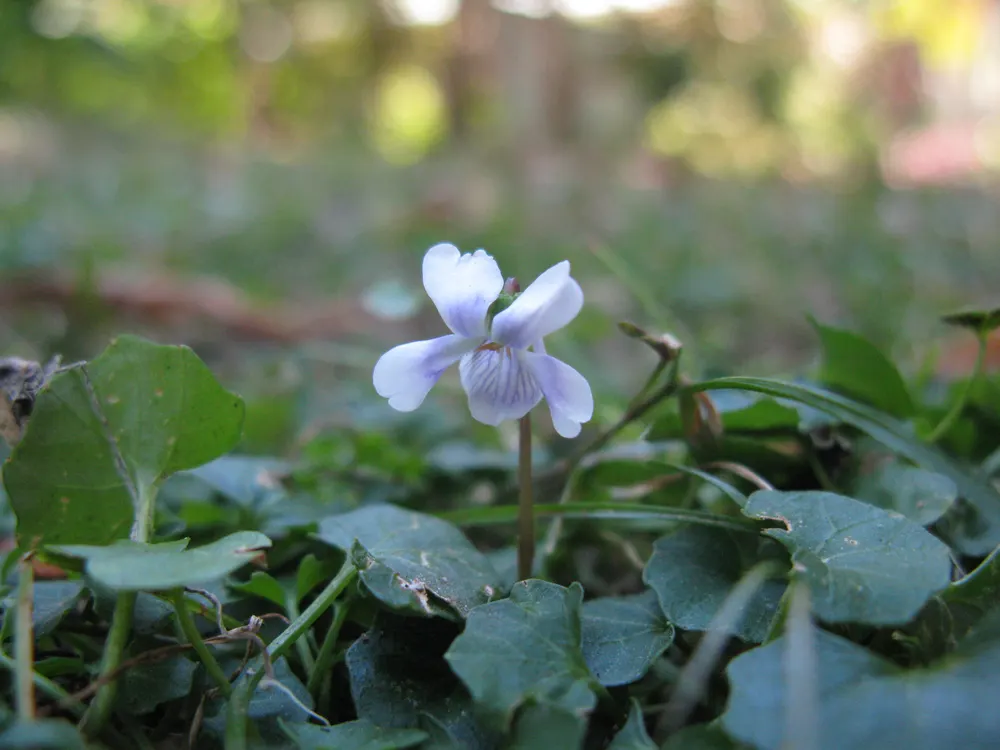
Photo: Harry Rose from Dungog, Australia, CC BY 2.0 (via Wikimedia Commons)
Ivy-leaf Violet
Viola hederacea
Also known as Native violet, Trailing violet, Australian violet
Key benefits
✦Traditional uses
✦The ivy-leaf violet never earned a chapter in the old European herbals the way its cousin, sweet violet, did. Its history is a quieter, more domestic one, woven through the shaded gardens of eastern Australia, where generations of home gardeners have leaned on it to soften hard edges under trees and along stepping-stone paths. In recent decades, Australian cooks and native-food enthusiasts have rediscovered its small white and violet flowers as a delicate, faintly sweet garnish, scattering them over salads, desserts, and drinks much as other cultures have long done with their own local violets. Its charm has always belonged more to the kitchen garden and the flower bed than to the medicine chest.
How to grow & use it
✦The full apothecary for Ivy-leaf Violet
Traditional remedies and step-by-step preparations, a complete growing guide, and how to harvest, dry, and store it, all unlocked with HerbLens Unlimited.
- ✦Remedies & preparations
- ✦ Growing guide
- ✦Harvest & storage
From under $6 a month. Free plant identifications always included.
- ✦Mint
- ✦Chamomile
- ✦Lemon verbena
- ✦Sweet violet (Viola odorata)
- ✦Pansy (Viola x wittrockiana)
“For the shady corner that wants something soft, green, and quietly blooming underfoot.”
Many of the ivy-leaf violets sold in nurseries today are, strictly speaking, not Viola hederacea at all. Botanists later determined that much of the plant long grown and traded under that name is actually a closely related species, Viola banksii, and the mix-up is so widespread that garden centers still sell both under the old, familiar name.
A safe, edible garnish flower, though only eat flowers grown without pesticides and be sure of identification, since several unrelated plants share the name violet.