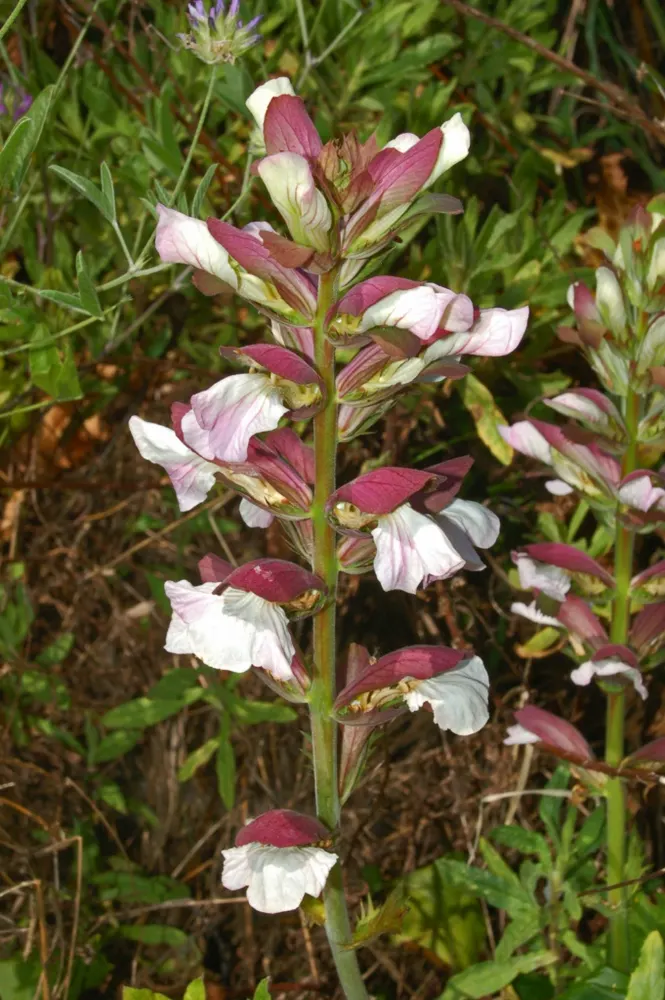
Photo: Hectonichus, CC BY-SA 3.0 (via Wikimedia Commons)
Bear's Breeches
Acanthus mollis
Also known as Bear's Breech, Sea Dock, Brank Ursine, Acanthus
Key benefits
✦Traditional uses
✦Long before it became a garden favorite, bear's breeches was a working plant in Mediterranean folk medicine. Villagers crushed the broad, glossy leaves into a soft mash and bound them over bruises, sprains, and stubborn wounds, trusting the leaf's cool, mucilaginous texture to calm angry skin. The root, more astringent than the leaf, was sometimes simmered into a wash used the same way. Its greater legacy, though, is artistic rather than medicinal: the scalloped leaf shape became the template for the Corinthian column capital, carved into temples and buildings for over two thousand years.
How to grow & use it
✦The full apothecary for Bear's Breeches
Traditional remedies and step-by-step preparations, a complete growing guide, and how to harvest, dry, and store it, all unlocked with HerbLens Unlimited.
- ✦Remedies & preparations
- ✦ Growing guide
- ✦Harvest & storage
From under $6 a month. Free plant identifications always included.
- ✦Plantain
- ✦Comfrey
- ✦Calendula
- ✦Comfrey leaf
- ✦Marshmallow leaf
“For the gardener who wants the drama of an ancient temple frieze in living leaf form, and a soft green poultice on hand for the everyday bumps and bruises of garden life.”
According to the Roman architect Vitruvius, the Corinthian capital was born when the sculptor Callimachus spotted an acanthus plant growing up through a basket left on a young girl's grave, its leaves curling gracefully around the woven sides, and carved the design into stone ever after.
Acanthus mollis is not documented as a seriously toxic plant, but it has not been well studied by modern science, and its safety for internal use has not been established, so it is traditionally applied to the skin rather than taken by mouth. The leaves and sap can occasionally irritate sensitive skin, so a small patch test is wise before broader use, and the plant should be kept away from open wounds if any reaction appears. Because safety data is lacking, it is best avoided during pregnancy and breastfeeding. As with any traditional herbal preparation, it is worth talking with a qualified healthcare provider before use, especially for children, those who are pregnant or nursing, or anyone managing an ongoing health condition.