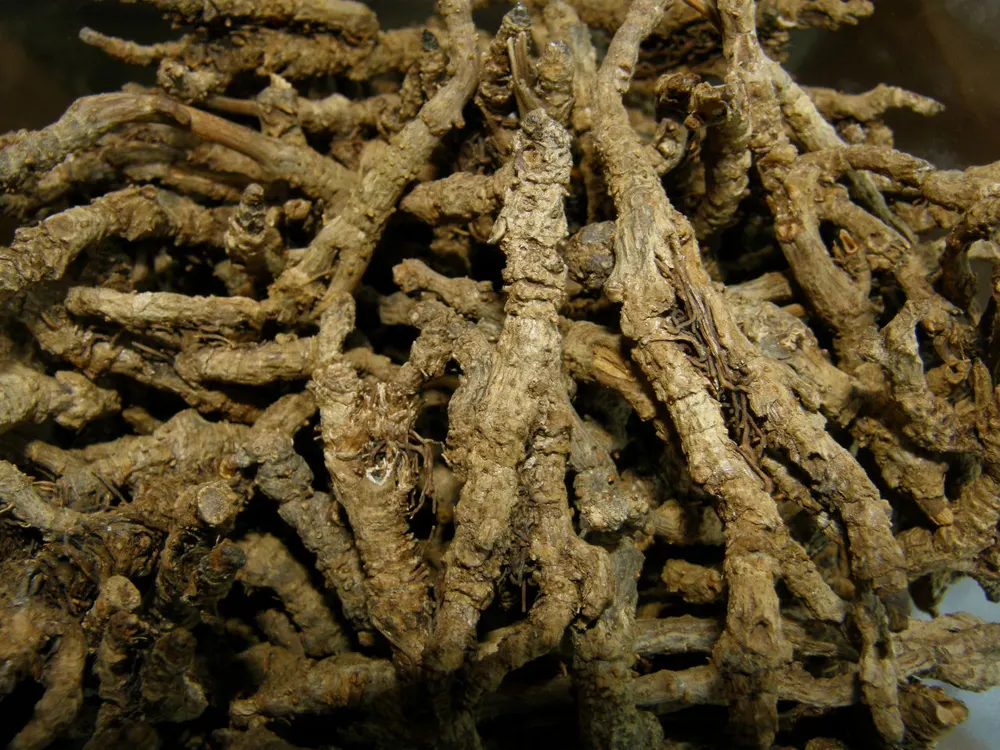
Photo: 松岡明芳, CC BY-SA 3.0 (via Wikimedia Commons)
Chinese Goldthread
Coptis chinensis
Also known as Huang Lian, Coptis Root, Chinese Coptis, Goldthread Root
Key benefits
✦Traditional uses
✦Coptis chinensis has been a cornerstone of Chinese herbal medicine for nearly two thousand years, so central to the tradition that its Mandarin name, huang lian, simply means 'yellow connect,' after the bright golden thread of rhizome running beneath the soil. Physicians of old regarded it as one of the coldest and most bitter substances in the materia medica, reached for whenever the body seemed to run too hot, whether that showed up as a fevered stomach, a sore mouth, or restless irritability. It found its way into some of the most enduring classical formulas, almost always tempered by gentler herbs that softened its intensity. Over centuries it earned a reputation as a small but mighty root, used sparingly and with real respect.
How to grow & use it
✦The full apothecary for Chinese Goldthread
Traditional remedies and step-by-step preparations, a complete growing guide, and how to harvest, dry, and store it, all unlocked with HerbLens Unlimited.
- ✦Remedies & preparations
- ✦ Growing guide
- ✦Harvest & storage
From under $6 a month. Free plant identifications always included.
- ✦Licorice root
- ✦Chinese skullcap (Scutellaria)
- ✦Fresh ginger
- ✦Goldenseal (Hydrastis canadensis)
- ✦Barberry (Berberis vulgaris)
“For a whisper of old apothecary bitterness, called on sparingly to cool a fevered stomach or a sore mouth.”
Coptis chinensis owes its brilliant yellow rhizome, and its old role as a natural dye, to its high concentration of berberine, the same golden alkaloid that colors goldenseal and barberry root.
Chinese goldthread is rich in berberine and is meant for short-term, not everyday use. Avoid it during pregnancy and while nursing, and use caution alongside blood thinners or diabetes medication since it can interact with them.