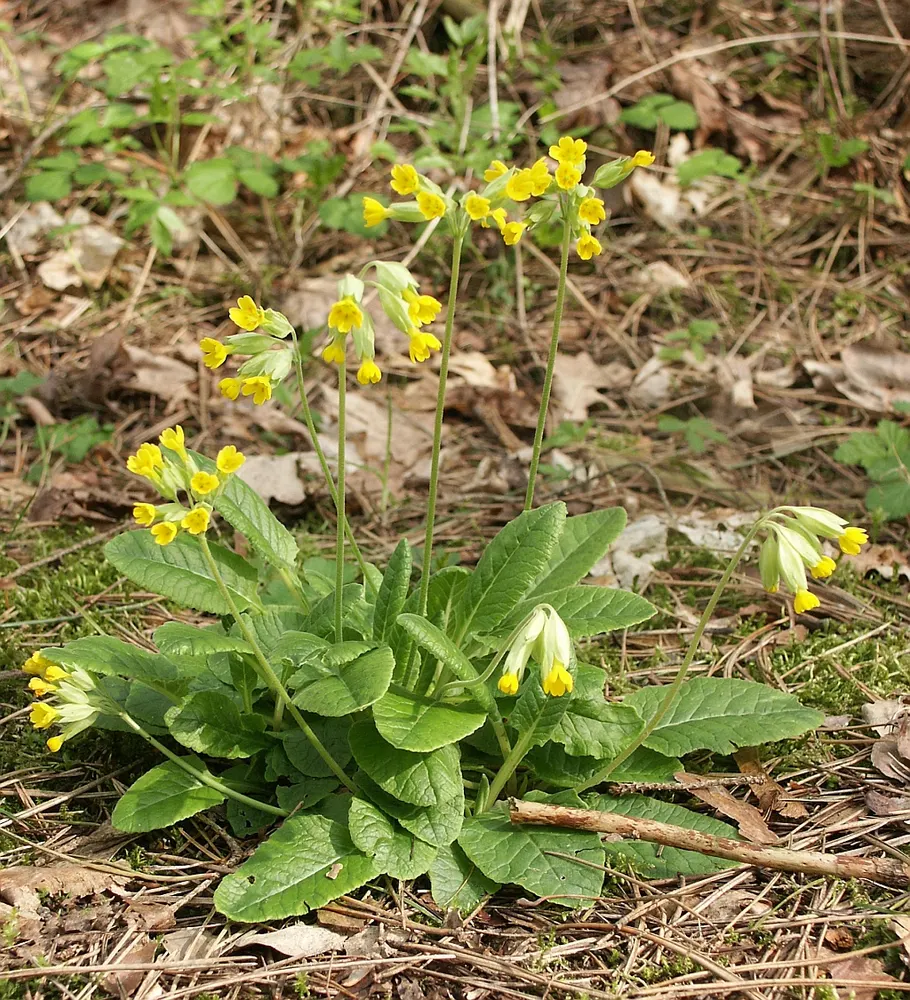
Photo: Picture taken by BerndH, CC BY-SA 3.0 (via Wikimedia Commons)
Cowslip
Primula veris
Also known as St. Peter's Keys, Fairy Cups, Herb Peter, Paigle, Palsywort
Key benefits
✦Traditional uses
✦Cowslip has been a fixture of the English cottage garden and hedgerow for centuries, its nodding heads of honey-scented, egg-yolk yellow blooms gathered every spring for wine, vinegar, and simple home remedies. Country herbalists brewed the flowers into a gentle evening tea to ease a wakeful night, while the root, rich in saponins, was traditionally simmered for coughs and chesty colds much as its cousin senega snakeroot was used across the Atlantic. Old wives also splashed cowslip water on the skin, believing it kept the complexion clear and freckle-free. It was considered a friendly, unassuming herb, gentle enough for household use but valued all the same.
How to grow & use it
✦The full apothecary for Cowslip
Traditional remedies and step-by-step preparations, a complete growing guide, and how to harvest, dry, and store it, all unlocked with HerbLens Unlimited.
- ✦Remedies & preparations
- ✦ Growing guide
- ✦Harvest & storage
From under $6 a month. Free plant identifications always included.
- ✦Chamomile
- ✦Lavender
- ✦Lemon Balm
- ✦Primrose (Primula vulgaris)
- ✦Linden flower
“For the quiet hour when the day needs to loosen its grip and sleep feels just out of reach.”
In old English folklore, the nodding cluster of cowslip blossoms was said to resemble a ring of keys, earning the plant names like St. Peter's Keys and Our Lady's Keys, and country tales held that fairies hid their gold treasure beneath the flowers where the keys had fallen.
Handling the fresh plant can cause contact dermatitis in sensitive people, and its coumarin-like compounds mean it should be avoided alongside blood-thinning medication or before surgery. Avoid during pregnancy and breastfeeding, and buy or grow it rather than collecting from the wild, since it's scarce in parts of its native range.