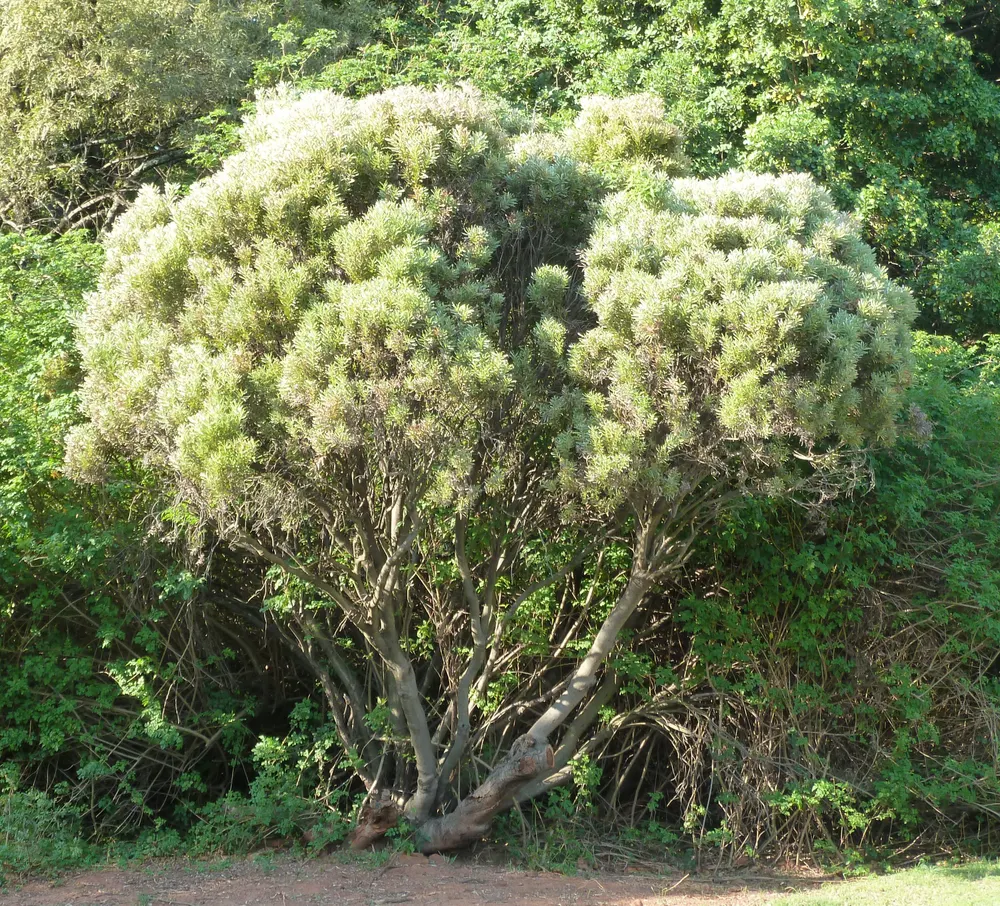
Photo: JMK, CC BY-SA 3.0 (via Wikimedia Commons)
Tarwood
Loxostylis alata
Key benefits
✦Traditional uses
✦Tarwood is a South African forest tree named for the dark, tar-like sap that seeps from cut wood and blackens on exposure to air, a trait it shares with many of its relatives in the cashew and poison ivy family. It has long been noted by foresters and gardeners more for its timber and its striking sprays of papery, wine-pink fruiting calyces than for any kitchen or medicine chest use. In gardens across its native range it has traditionally been planted as a hardy, fast-growing ornamental, valued for the way its fruit seems to make the tree bloom a second time each year. It is the only species in its genus, which has made it something of a curiosity among South African botanists and tree collectors.
How to grow & use it
✦The full apothecary for Tarwood
Traditional remedies and step-by-step preparations, a complete growing guide, and how to harvest, dry, and store it, all unlocked with HerbLens Unlimited.
- ✦Remedies & preparations
- ✦ Growing guide
- ✦Harvest & storage
From under $6 a month. Free plant identifications always included.
- ✦Wild olive
- ✦Cape honeysuckle
- ✦Plumbago
- ✦Kiggelaria africana (wild peach), for a similarly hardy native garden tree
- ✦Heteropyxis natalensis (lavender tree), for another fragrant South African forest-margin tree
“For a hardy tree that blushes pink from within, not for the medicine chest.”
Loxostylis alata is the sole species in its genus. Its name comes from the Greek loxos, meaning slanting, and stylis, meaning style, a nod to the tilted style at the center of its tiny flowers, while the real showstopper is the fruit, whose winged pink calyces flush the whole canopy long after the actual blossoms have faded.
Tarwood is in the same plant family as poison ivy and poison oak, and its sap and sawdust can cause allergic contact dermatitis and skin or respiratory irritation, especially when cutting or sanding the wood. It is not eaten or used internally; wear gloves when handling it.