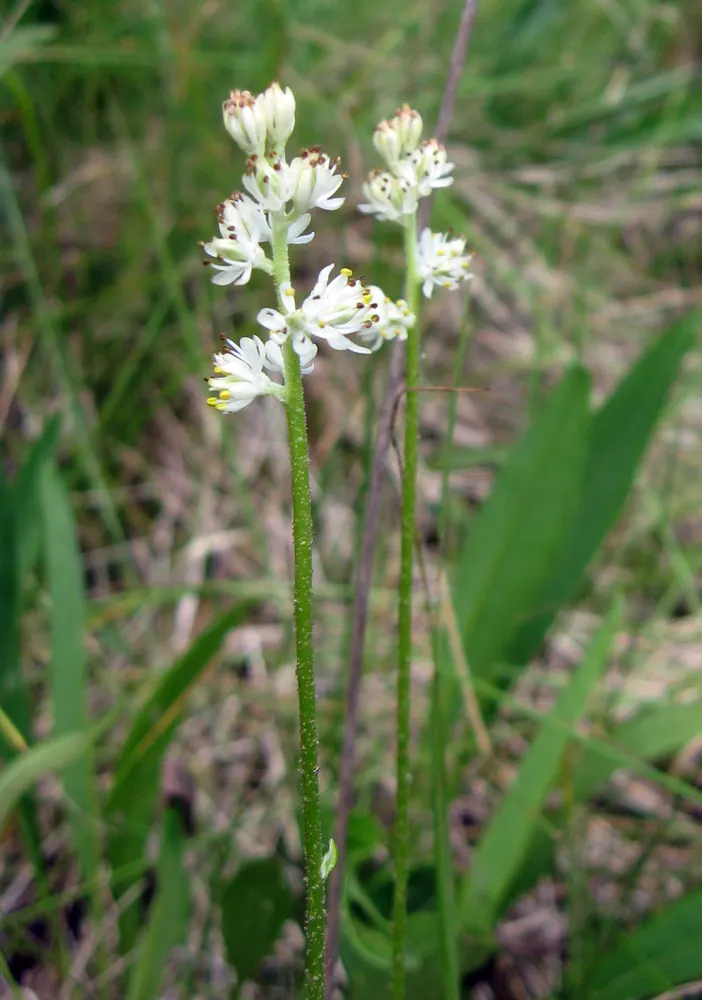
Photo: Mason Brock (Masebrock), Public domain (via Wikimedia Commons)
Sticky Tofieldia
Tofieldia glutinosa
Also known as Sticky False Asphodel, Glutinous Tofieldia, False Asphodel
Key benefits
✦Traditional uses
✦Tofieldia glutinosa carries the folk name false asphodel because its slender white flower spikes reminded early botanists of the true asphodels of the Mediterranean, even though the two are not close relatives. The genus honors Thomas Tofield, an eighteenth century English botanist, and the species name glutinosa simply describes the sticky, glandular stem that becomes obvious the moment you brush against it in the field. Rather than a history in the kitchen or the medicine chest, this modest plant has earned its place in the story of North America's wetlands as a faithful signpost, turning up again and again in the same calcium rich fens and bogs that shelter rare orchids, sundews, and other specialist plants. Botanists and wetland stewards have long treated its presence as a quiet clue that a bog is healthy and worth protecting.
How to grow & use it
✦The full apothecary for Sticky Tofieldia
Traditional remedies and step-by-step preparations, a complete growing guide, and how to harvest, dry, and store it, all unlocked with HerbLens Unlimited.
- ✦Remedies & preparations
- ✦ Growing guide
- ✦Harvest & storage
From under $6 a month. Free plant identifications always included.
- ✦Grass-of-Parnassus
- ✦Sundew
- ✦Pitcher plant
- ✦Grass-of-Parnassus (Parnassia glauca)
- ✦Bog asphodel (Narthecium americanum), where native and legally available
“For the quiet, waterlogged corners of a fen or bog garden, where small white blooms rise from sticky stems above cold, mineral-rich ground.”
The species name glutinosa refers to the sticky, glandular hairs covering the flowering stem. Botanists believe this stickiness traps crawling insects that might otherwise steal nectar without pollinating the flowers, while winged pollinators are still free to land and do their work.
Sticky Tofieldia has no history of food or medicinal use and no safety data exists for eating it, so it shouldn't be taken internally. It's uncommon or rare across parts of its range, so leave wild plants undisturbed. It also grows alongside other wetland plants that can be toxic if misidentified, so be sure of identification before handling it.