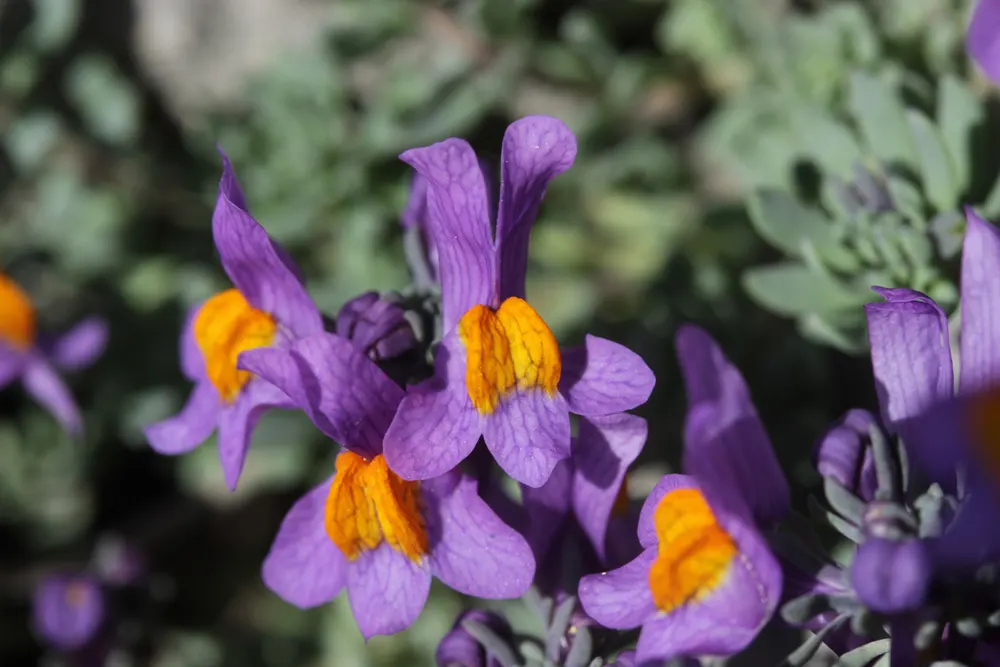
Photo: Björn S., CC BY-SA 3.0 (via Wikimedia Commons)
Alpine Toadflax
Linaria alpina
Also known as Mountain Toadflax, Alpine Linaria
Key benefits
✦Traditional uses
✦Alpine toadflax has never carried the deep herbal tradition of its lowland cousin, common toadflax. Its real story is a botanical one: for centuries, mountain travelers and early alpine botanists noted it as one of the first flowers to soften the raw gray scree left behind by retreating snow and ice. By the Victorian era, when rock gardening became a passion among European gardeners, its cheerful violet, snapdragon-like flowers with a golden throat earned it a place in stone troughs and alpine beds, valued purely for the beauty and toughness it carries down from the high peaks.
How to grow & use it
✦The full apothecary for Alpine Toadflax
Traditional remedies and step-by-step preparations, a complete growing guide, and how to harvest, dry, and store it, all unlocked with HerbLens Unlimited.
- ✦Remedies & preparations
- ✦ Growing guide
- ✦Harvest & storage
From under $6 a month. Free plant identifications always included.
- ✦Saxifraga
- ✦Dianthus alpinus
- ✦Sempervivum
- ✦Linaria vulgaris (common toadflax, for garden and habitat interest only)
“For the gardener who loves the wild high places, where the snow lingers into June and only the toughest little flowers dare to bloom.”
Alpine toadflax is one of the first flowering plants to move into bare ground after a glacier retreats. Its roots stitch together loose scree and moraine almost as soon as the ice has pulled back, making it a true pioneer of the high mountains.
There's no reliable tradition of eating or brewing alpine toadflax, and like related toadflax species it may contain compounds that are irritating or mildly toxic if ingested, including to grazing livestock and pets.