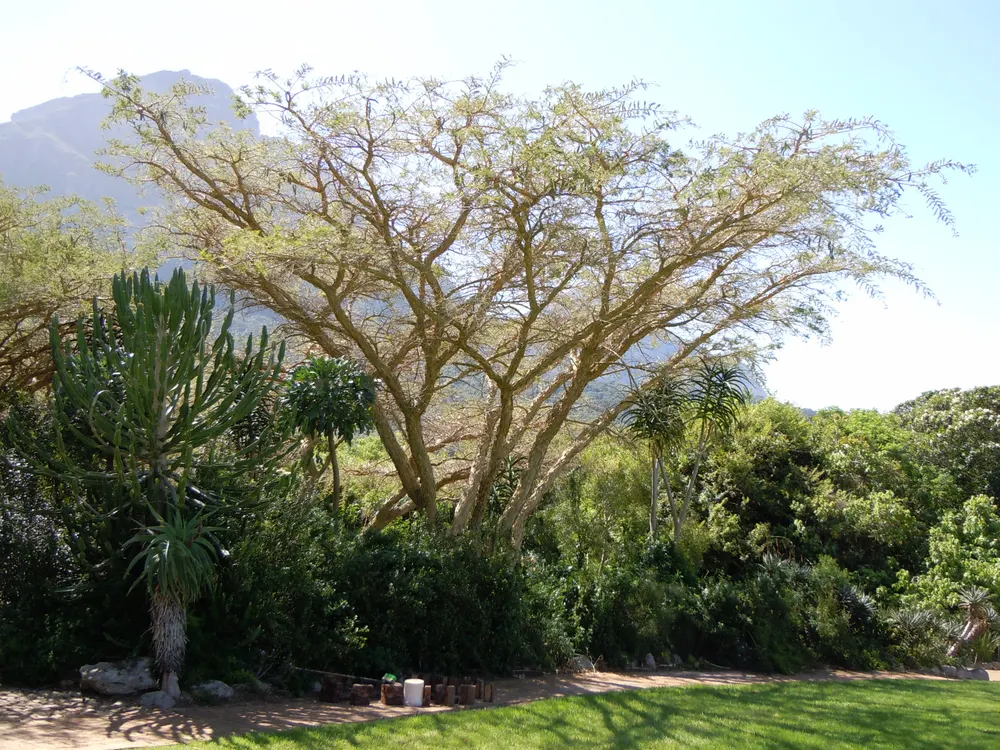
Photo: Drakenwolf, CC BY-SA 3.0 (via Wikimedia Commons)
Paperbark Thorn
Vachellia sieberiana
Also known as Paperbark Acacia, Acacia sieberiana (former botanical name), White Thorn
Key benefits
✦Traditional uses
✦Across much of southern and eastern Africa, the paperbark thorn has long stood as a landmark tree, its glowing, flaking bark visible for miles across open grassland. Communities in the region have traditionally turned to decoctions of its bark for upset stomachs and looseness of the bowels, and to washes made from the bark or roots for wounds and skin complaints. The gum that seeps from wounds in its trunk, much like the gum arabic of its relatives, was traditionally chewed or dissolved in water to soothe a sore throat. Beyond its medicinal reputation, the tree has fed livestock, shaded homesteads, and supplied wood and fiber to generations of families who settled near it.
How to grow & use it
✦The full apothecary for Paperbark Thorn
Traditional remedies and step-by-step preparations, a complete growing guide, and how to harvest, dry, and store it, all unlocked with HerbLens Unlimited.
- ✦Remedies & preparations
- ✦ Growing guide
- ✦Harvest & storage
From under $6 a month. Free plant identifications always included.
- ✦African wormwood (Artemisia afra)
- ✦Buchu
- ✦Wild ginger
- ✦Oak bark
- ✦Witch hazel bark
“For the quiet strength of a tree that has shaded homesteads, fed herds, and settled stomachs across the African savanna for generations.”
The paperbark thorn takes its name from bark that peels away in thin, papery, golden-yellow sheets, so bright against the grass that it was traditionally used by travelers as a natural landmark across the open savanna.
The tannin-rich bark can cause digestive upset if used in excess and isn't well studied, so it's best avoided in pregnancy and in young children. The tree's thorns are sizable enough to cause puncture wounds, which should be cleaned promptly.