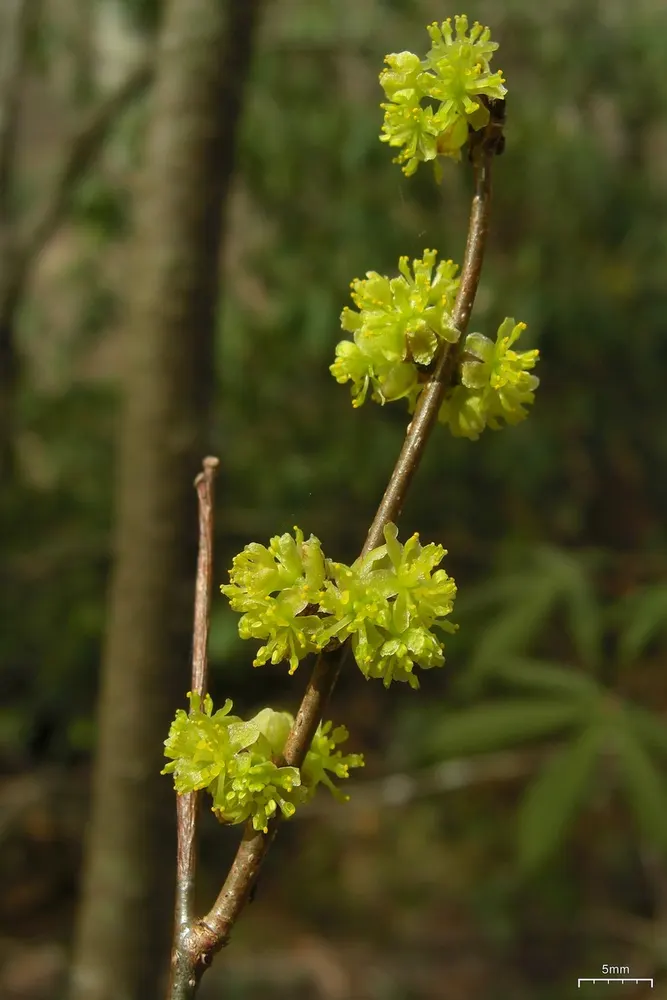
Photo: Jason Hollinger, CC BY 2.0 (via Wikimedia Commons)
Spicebush
Lindera benzoin
Also known as Northern Spicebush, Wild Allspice, Benjamin Bush, Fever Bush
Key benefits
✦Traditional uses
✦Long before allspice arrived on ships from the Caribbean, Spicebush was doing its work in the pantries and sickrooms of eastern North America. Native peoples, including the Cherokee, Iroquois, and Delaware, steeped its twigs and bark into a warming tea for colds, fevers, coughs, and an unsettled stomach, and the fragrant reddish berries were dried and crushed as a peppery seasoning for meats and stews. Colonial settlers adopted the plant eagerly, calling it wild allspice, and leaned on it during shortages of imported spices when trade routes were cut off. It became a familiar dooryard remedy, the kind of shrub every household knew by scent alone.
How to grow & use it
✦The full apothecary for Spicebush
Traditional remedies and step-by-step preparations, a complete growing guide, and how to harvest, dry, and store it, all unlocked with HerbLens Unlimited.
- ✦Remedies & preparations
- ✦ Growing guide
- ✦Harvest & storage
From under $6 a month. Free plant identifications always included.
- ✦Ginger
- ✦Cinnamon
- ✦Sassafras
- ✦Allspice
- ✦Bay leaf
“For that first warming sip against a coming cold, the whole woods seemed to smell of spicebush.”
Spicebush is a favorite host plant for the spicebush swallowtail butterfly, whose caterpillars mimic tiny snakes, complete with false eyespots, to startle away hungry birds.
Spicebush has a long history as a culinary spice and tea with no significant toxicity on record.