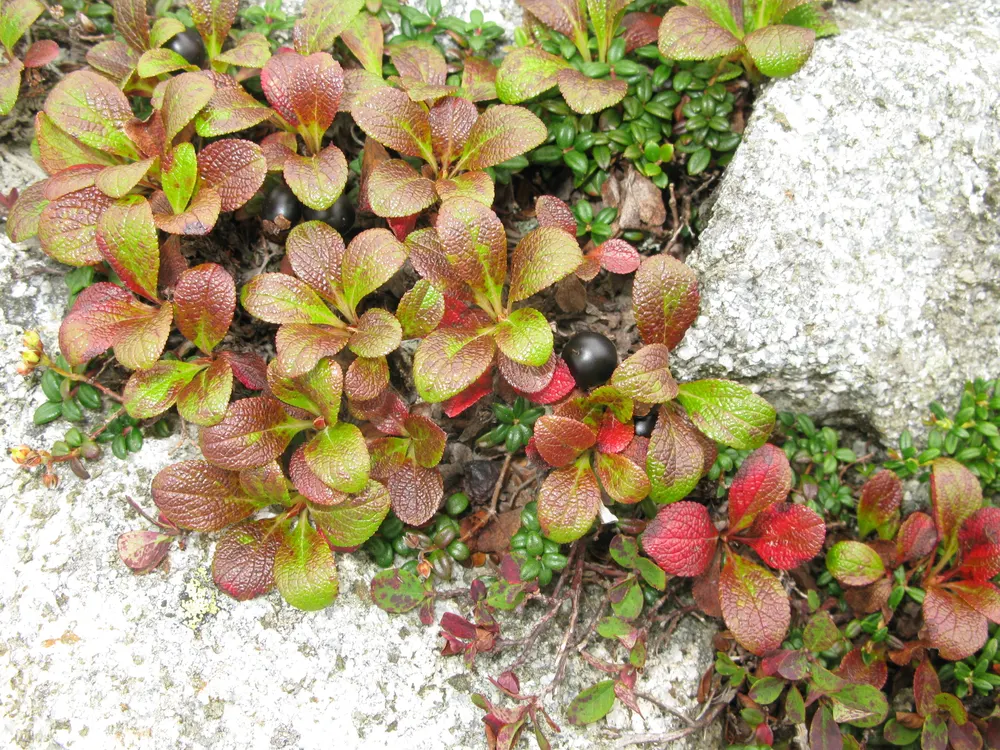
Photo: Qwert1234, CC BY-SA 3.0 (via Wikimedia Commons)
Alpine Bearberry
Arctostaphylos alpina
Also known as Alpine Bearberry, Black Bearberry, Alpenbearberry, Arctous alpina
Key benefits
✦Traditional uses
✦Long before botanists gave it a Latin name, alpine bearberry carpeted the tundra that Arctic and subarctic peoples walked every autumn, its low mats turning the hillsides a deep, startling red. Circumpolar communities across Scandinavia, Siberia, and the North American Arctic gathered its dark, wrinkled berries as a reliable late-season food, often after the first frost sweetened them, and shared the plant's leaves in the same folk astringent tradition long applied to its close relative, common bearberry. That sister species became one of the most enduring herbs for supporting the urinary tract in European and Indigenous herbalism alike, and alpine bearberry, growing from the very same chemistry, was drawn into similar, if more modest and localized, use. It was as much a plant of sustenance as of medicine, valued for surviving where little else would grow.
Growing guide
✦Fresh to dried
✦Traditional preparations
✦Alpine Bearberry Leaf Tea
A modest, short-term infusion echoing the old northern bearberry leaf tradition, taken occasionally rather than daily.
How it's made. Traditionally, a light tea is made by steeping 1 teaspoon of dried, crumbled leaves in 250 ml of just-boiled water for 5 to 10 minutes, then straining before drinking. Limited to occasional use.
- ✦Common bearberry (uva-ursi)
- ✦Juniper
- ✦Cranberry
- ✦Common bearberry (Arctostaphylos uva-ursi)
- ✦Cranberry (Vaccinium macrocarpon)
“When the tundra turns crimson at summer's end and the old, low mats of the north offer up their dark, frost-sweetened berries.”
Unlike its evergreen cousin common bearberry, alpine bearberry is deciduous, and each autumn its whole low mat blazes scarlet across the tundra before the leaves drop, a color change so dramatic that some northern travelers used it as a seasonal marker for when the berries were ready to pick.
The berries are a safe traditional food, but the leaves contain arbutin and shouldn't be used long-term or in high doses. Avoid leaf preparations during pregnancy, breastfeeding, or with kidney disease.