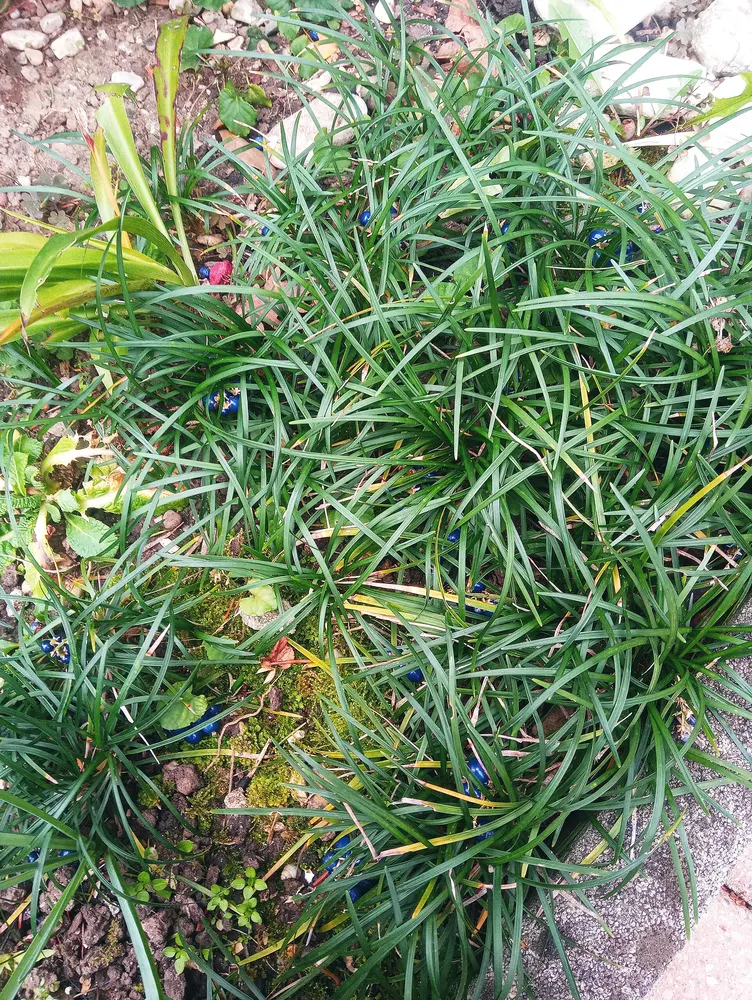
Photo: Shabicht, CC0 (via Wikimedia Commons)
Dwarf Lilyturf
Ophiopogon japonicus
Also known as Mondo Grass, Mai Men Dong, Fountain Plant, Snakebeard
Key benefits
✦Traditional uses
✦Long before it edged garden paths in the West as a tidy groundcover, this humble tuft of grass-like leaves was quietly one of the most trusted roots in the Chinese pharmacy. Its dried tuber, known as Mai Men Dong, appears in the Shennong Bencao Jing, an herbal record so old its author is remembered only as a legend, and it was ranked among the superior herbs, the ones considered safe and worthy of long, steady use. For centuries, practitioners reached for it to moisten a body left dry and depleted by fever, coughing, or worry, easing an irritable heart and a parched throat in the same gentle motion. It still anchors classic formulas like Sheng Mai San, brewed to restore what a long illness or a long summer had drawn out of a person.
How to grow & use it
✦The full apothecary for Dwarf Lilyturf
Traditional remedies and step-by-step preparations, a complete growing guide, and how to harvest, dry, and store it, all unlocked with HerbLens Unlimited.
- ✦Remedies & preparations
- ✦ Growing guide
- ✦Harvest & storage
From under $6 a month. Free plant identifications always included.
- ✦Schisandra berry
- ✦American ginseng
- ✦Lily bulb (Bai He)
- ✦Solomon's seal root
- ✦American ginseng
“For the dry, papery cough that lingers after a long fever has already broken.”
Dig up a mature clump and you will find the roots strung with tiny, grape-like tubers, which is exactly why old herbalists sometimes called it snakebeard, a nickname for a root that looks like beads threaded along a cord.
Dwarf Lilyturf is a mild, food-grade herb with a long history of safe use, though in Chinese herbal tradition it's avoided during colds with chills or loose stools since it's considered cooling and moistening.