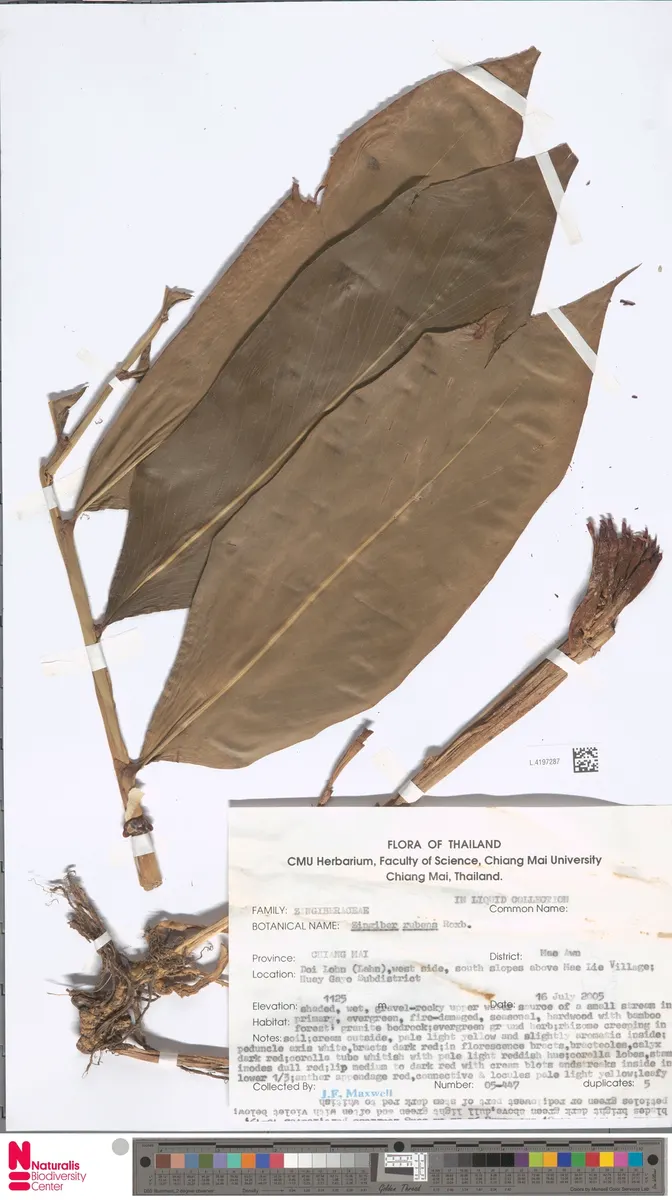
Photo: Naturalis Biodiversity Center, CC0 (via GBIF)
Forest Ginger
Zingiber rubens
Also known as Ban Ada (Odia, meaning "forest ginger"), Bankachika, Gai-garuda
Key benefits
✦Traditional uses
✦Deep in the moist forest floors from Sikkim through eastern India and on into Indo-China grows a shy, lesser known cousin of the ginger that flavors tea and curries the world over. In Odisha, local communities call it Ban Ada, which translates simply to forest ginger, a name that has followed the plant for generations and hints at how naturally people have always recognized it as kin to the kitchen spice. Unlike its famous relative Zingiber officinale, this wild ginger was never widely recorded in the old medicine texts, and most of what is known today about its rhizome oils and compounds comes from recent botanical and phytochemical study rather than centuries of written practice. For now it remains more a forager's find and a botanist's subject than a settled household remedy.
How to grow & use it
✦The full apothecary for Forest Ginger
Traditional remedies and step-by-step preparations, a complete growing guide, and how to harvest, dry, and store it, all unlocked with HerbLens Unlimited.
- ✦Remedies & preparations
- ✦ Growing guide
- ✦Harvest & storage
From under $6 a month. Free plant identifications always included.
- ✦Turmeric (Curcuma longa)
- ✦Common ginger (Zingiber officinale)
- ✦Cardamom (Elettaria cardamomum)
- ✦Common ginger (Zingiber officinale)
- ✦Galangal (Alpinia galanga)
“For the wild, unwritten cousin of the ginger jar, still rooted deep in its home forest floor.”
The species name rubens is Latin for blushing or growing red, the same root behind words like ruby and rubicund. It refers to the rosy flush along the plant's flower bracts, a small blush of color tucked into the shade of the forest floor.
Forest ginger is a wild, little-studied relative of common ginger, and wild Zingiberaceae rhizomes can be hard to tell apart, so never gather or eat it without expert identification. As with ginger-type rhizomes generally, use extra caution if you have a bleeding disorder, take blood-thinning medication, or have gallstones.