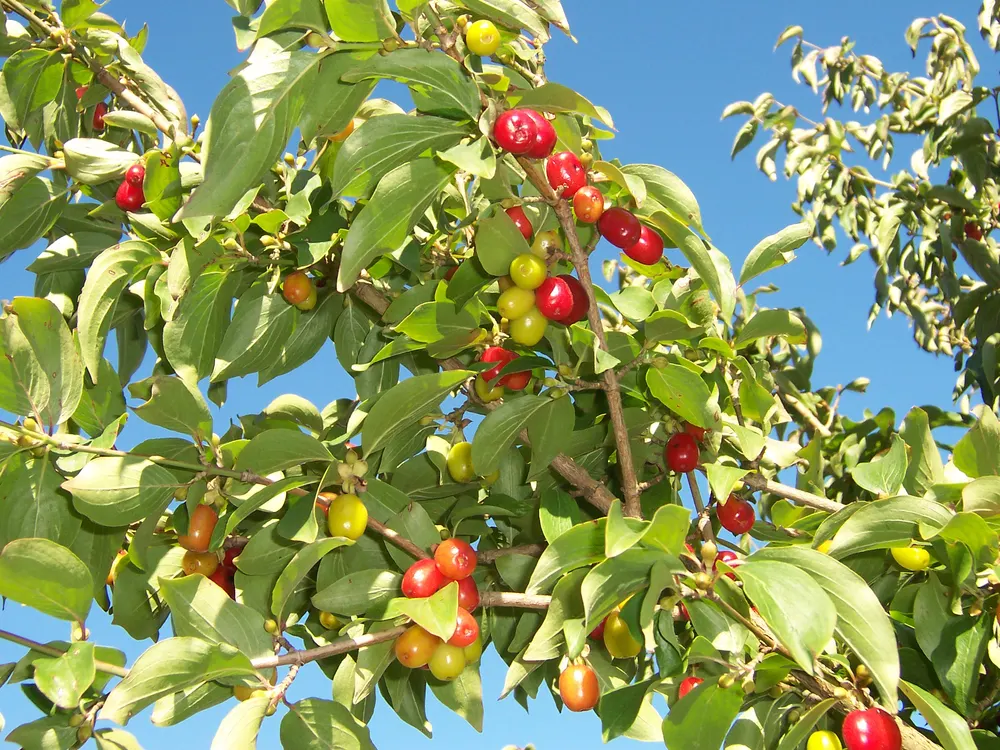
Photo: B.navez, CC BY-SA 3.0 (via Wikimedia Commons)
Cornelian Cherry
Cornus mas
Also known as Cornel, European Cornel, Cornelian Cherry Dogwood, Zoghal Akhteh (Persian), Kizil
Key benefits
✦Traditional uses
✦Long before it found its way into modern gardens, the cornelian cherry was a fixture of the pantry and the medicine chest across Persia, the Caucasus, and Central Europe. In Iran, where the tart fruit is known as zoghal akhteh, it has traditionally been dried and simmered into remedies for upset stomachs and used to season rice and stews alike. Villages across the Balkans and the Caucasus turned the ripe fruit into syrups, cordials, and preserves meant to fortify the body through the cold months, prizing it for its bright acidity and its reputation as a tonic for the gut. Ottoman and Central European herbalists likewise valued it as a gentle, astringent food-medicine, one that blurred the line between kitchen and apothecary.
How to grow & use it
✦The full apothecary for Cornelian Cherry
Traditional remedies and step-by-step preparations, a complete growing guide, and how to harvest, dry, and store it, all unlocked with HerbLens Unlimited.
- ✦Remedies & preparations
- ✦ Growing guide
- ✦Harvest & storage
From under $6 a month. Free plant identifications always included.
- ✦Rose hips
- ✦Hawthorn
- ✦Ginger
- ✦Rose hips
- ✦Sour cherry
“When you want a jewel-toned, tart-sweet ally to carry the pantry, and the body, through the turning of the seasons.”
The cornelian cherry's wood is so dense it sinks in water, and the ancient Greeks and Romans prized it above all other timber for spear shafts and javelins, including, by legend, the spear of Achilles.
Cornelian cherry's ripe fruit is widely eaten and safe; unripe fruit is strongly astringent and can upset the stomach if eaten in quantity.