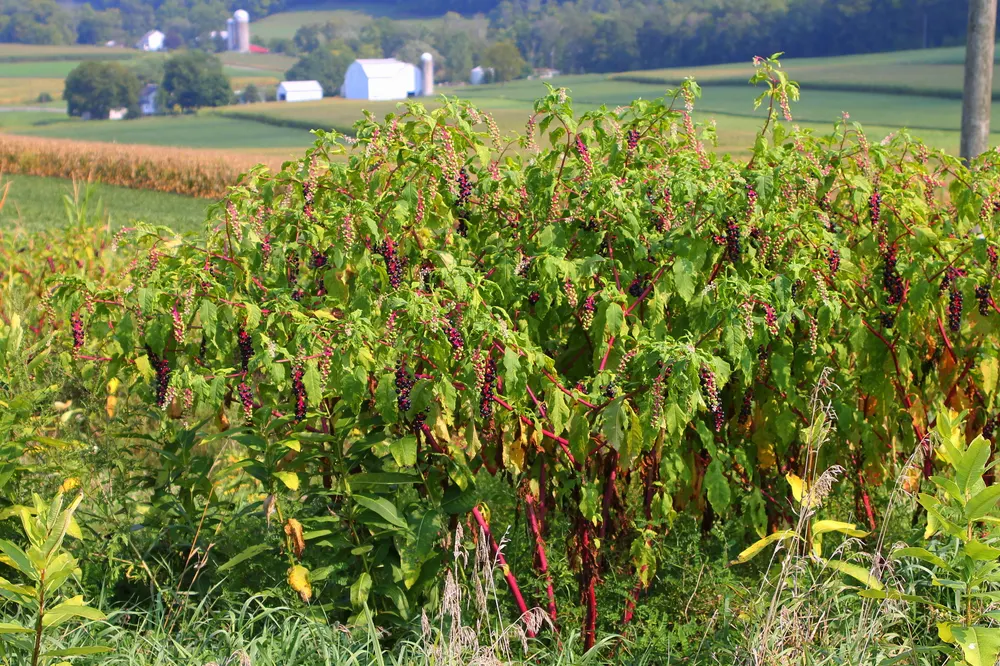
Photo: Jakec, CC BY-SA 4.0 (via Wikimedia Commons)
Pokeweed
Phytolacca americana
Also known as Pokeweed, Poke, Pokeberry, Poke Sallet, American Nightshade
Key benefits
✦Traditional uses
✦Pokeweed has a long, tangled history in American folk life, most famously as poke sallet, a mess of young spring greens that Southern and Appalachian families boiled down through several changes of water before eating, treating it as a rite of spring even as they respected its danger. Its deep purple berries were pressed for ink and dye for generations, and Civil War soldiers on both sides are said to have written letters home in pokeberry juice, some of which survive with their magenta script still legible today. Traditional herbalists in Appalachia sometimes turned to the root in very small, carefully measured external preparations for skin complaints and sore joints, always treating it as a strong and serious plant rather than an everyday remedy. Because of that reputation, pokeweed sits at the edge of American herbal tradition, admired and studied more than it was ever casually used.
How to grow & use it
✦The full apothecary for Pokeweed
Traditional remedies and step-by-step preparations, a complete growing guide, and how to harvest, dry, and store it, all unlocked with HerbLens Unlimited.
- ✦Remedies & preparations
- ✦ Growing guide
- ✦Harvest & storage
From under $6 a month. Free plant identifications always included.
- ✦Historically foraged alongside spring greens like dandelion and lambsquarters in Appalachian cooking traditions
- ✦Berries and root were sometimes noted alongside sassafras and sarsaparilla in old Southern folk medicine chests
- ✦For traditional skin-soothing folklore without the toxicity risk, herbalists more often reach for calendula
- ✦For traditional joint and rheumatism folklore, yellow dock or burdock root are far gentler, better documented choices
“A plant to admire from the path, not the plate, magenta stems and inky berries that mark the turn of the season.”
During the Civil War, soldiers on both sides sometimes wrote letters home using ink pressed from pokeweed berries, and a number of those magenta-inked letters have survived in archives for well over 150 years.
Pokeweed is genuinely toxic, and every part of the mature plant, root, leaves, stems, and the dark purple berries, can cause serious poisoning. Symptoms of ingestion include severe vomiting, cramping, diarrhea, low blood pressure, and in serious cases, breathing difficulty and convulsions; children are especially vulnerable, and even a handful of raw berries has caused dangerous poisonings. The old Southern tradition of "poke sallet," in which only the very youngest spring shoots are boiled and drained multiple times before eating, still carries real risk, since timing, plant age, and preparation all have to be exactly right, and mistakes have sent experienced foragers to the hospital. The root, which some folk healers once used in tiny, carefully measured doses for rheumatism and skin complaints, is the most toxic part of the plant and was handled only by those with deep, specialized training. Pokeweed should never be ingested, prepared as food or medicine, or given to children or pets, and should be avoided entirely during pregnancy and breastfeeding. If you suspect pokeweed poisoning, contact Poison Control or emergency services immediately, and always consult a qualified healthcare provider or toxicologist rather than relying on traditional lore for anything involving this plant.