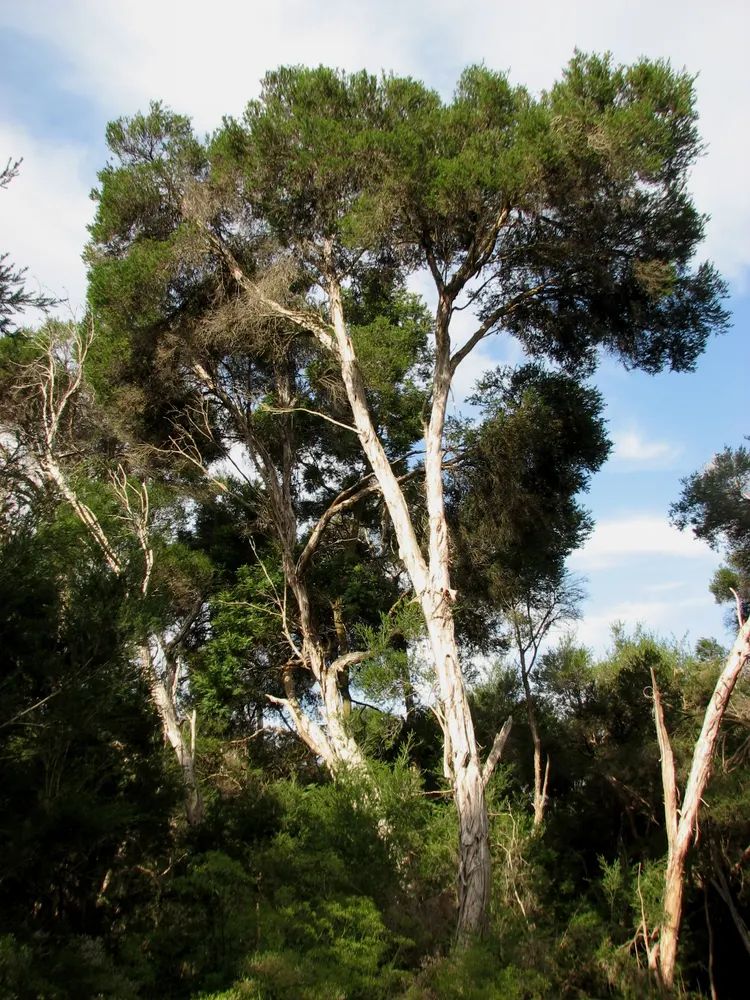
Photo: Melburnian, CC BY-SA 3.0 (via Wikimedia Commons)
Rosalina (Lavender Tea Tree)
Melaleuca ericifolia
Also known as Rosalina, Lavender Tea Tree, Swamp Paperbark, Rosewood Tea Tree
Key benefits
✦Traditional uses
✦Melaleuca ericifolia belongs to the same paperbark family that Aboriginal Australians relied on for generations, peeling the soft, layered bark from related melaleucas to line shelters, wrap food for cooking, and pad bedding. This particular species, growing thick along the swampy lowlands of Victoria and Tasmania, was distilled into essential oil much more recently, in the 1990s, when Australian growers noticed its foliage produced an oil far gentler and sweeter than its famous cousin, tea tree. It was given the name Rosalina for its soft, almost floral character, and it quickly found a place in aromatherapy as the tea tree family's tender-hearted relative, one considered mild enough for children and delicate skin. It has traditionally been used to ease stuffy, congested breathing and to calm the mind before sleep.
How to grow & use it
✦The full apothecary for Rosalina (Lavender Tea Tree)
Traditional remedies and step-by-step preparations, a complete growing guide, and how to harvest, dry, and store it, all unlocked with HerbLens Unlimited.
- ✦Remedies & preparations
- ✦ Growing guide
- ✦Harvest & storage
From under $6 a month. Free plant identifications always included.
- ✦Lavender
- ✦Eucalyptus
- ✦True tea tree (Melaleuca alternifolia)
- ✦Tea tree oil, used more sparingly
- ✦Ravensara
“When you want tea tree's clarity without its sharpness.”
Rosalina was practically unknown outside Australia until the 1990s, when growers distilling Melaleuca ericifolia noticed its oil smelled softer and more floral than ordinary tea tree, and gave it a name of its own to set it apart from its sharper-scented relatives.
This essential oil is for topical or inhaled use only and should never be swallowed, as ingestion can cause nausea, irritation, or serious harm. Always dilute it in a carrier oil, patch test first, and keep it away from eyes, broken skin, children, and pets.