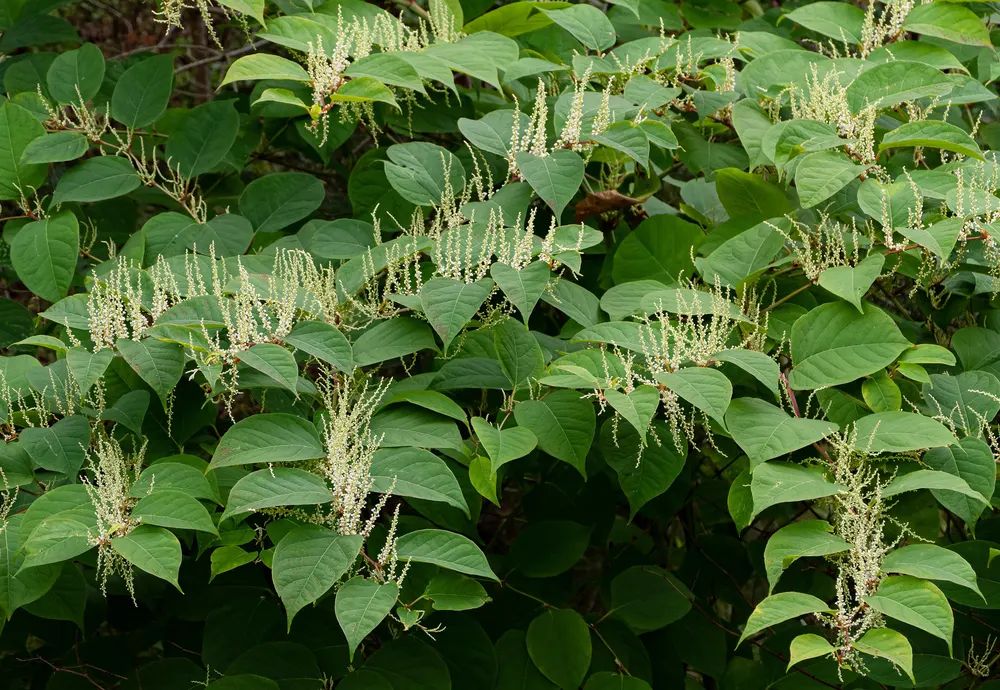
Photo: W.carter, CC0 (via Wikimedia Commons)
Japanese Knotweed
Polygonum cuspidatum
Also known as Itadori, Hu Zhang, Fallopia japonica, Reynoutria japonica, Mexican bamboo
Key benefits
✦Traditional uses
✦In Chinese medicine the root is known as Hu Zhang, 'tiger's cane,' and has been used for centuries to invigorate blood flow, clear heat and dampness, and support the lungs and liver. In Japan it is called Itadori, meaning roughly 'remove pain,' a name that speaks to its long folk use for aching joints and bruising. Long before Western science took an interest in its resveratrol content, village herbalists were digging the autumn roots and simmering them into dark, earthy decoctions. The young red-flecked shoots have also been gathered as a tart spring vegetable, cooked much like rhubarb, in both Asian and more recently Western kitchens.
How to grow & use it
✦The full apothecary for Japanese Knotweed
Traditional remedies and step-by-step preparations, a complete growing guide, and how to harvest, dry, and store it, all unlocked with HerbLens Unlimited.
- ✦Remedies & preparations
- ✦ Growing guide
- ✦Harvest & storage
From under $6 a month. Free plant identifications always included.
- ✦Turmeric
- ✦Ginger root
- ✦Dandelion root
- ✦Rhubarb root
- ✦Turmeric
“For the stubborn ache that circulation forgot, and the heat that needs somewhere to go.”
Japanese knotweed root is one of the richest natural sources of resveratrol, the same antioxidant compound found in red wine, and for years it was the primary commercial source for resveratrol supplements before the industry largely shifted to grape skin byproducts. It is a strange bit of irony that a plant so despised by gardeners for cracking pavement and crowding out riverbanks was quietly stocking apothecary shelves the whole time.
The root can act as a laxative in excess and carries oxalates, so people prone to kidney stones should be cautious. It's traditionally avoided in pregnancy and may interact with blood thinners like warfarin due to its effect on liver enzymes and clotting.