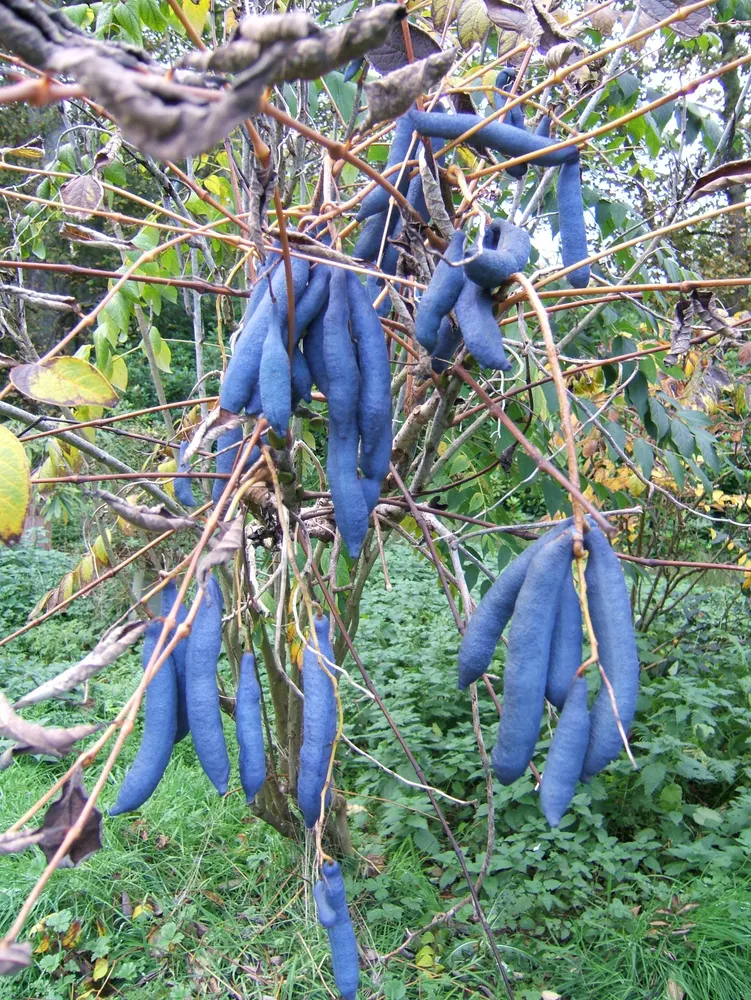
Photo: MPF, CC BY-SA 3.0 (via Wikimedia Commons)
Dead Man's Fingers (Blue Sausage Fruit)
Decaisnea fargesii
Also known as Blue Sausage Fruit, Blue Bean Shrub, Farges' Decaisnea, Dead Man's Fingers
Key benefits
✦Traditional uses
✦Decaisnea fargesii earned its haunting common name from gardeners startled by the sight of its ripe pods, swollen, waxy, and colored a metallic slate blue unlike almost anything else in the plant world, dangling from bare branches like a row of bruised fingers. In its native mountain forests of Sichuan, Yunnan, and neighboring provinces, local communities have long gathered the pods once they split open, scooping out the pale, gelatinous pulp to eat fresh off the branch as a foraged autumn treat. It has never held a significant place in formal herbal medicine, and it is best appreciated today as it always was in its homeland, a curious woodland fruit and a handsome ornamental shrub rather than a remedy.
How to grow & use it
✦The full apothecary for Dead Man's Fingers (Blue Sausage Fruit)
Traditional remedies and step-by-step preparations, a complete growing guide, and how to harvest, dry, and store it, all unlocked with HerbLens Unlimited.
- ✦Remedies & preparations
- ✦ Growing guide
- ✦Harvest & storage
From under $6 a month. Free plant identifications always included.
- ✦Akebia (chocolate vine)
- ✦Hardy kiwi
- ✦Native woodland ferns
- ✦Akebia quinata fruit for a similarly unusual, mild-fleshed woodland treat
“For the gardener drawn to the strange and startling, a shrub whose autumn pods ripen into fingers of otherworldly blue.”
The blue of the ripe pods is so improbable that early Western plant collectors sent home in the 1800s reportedly assumed the color must be a trick of dye or disease, until they saw it growing.
The sweet pulp of dead man's fingers is traditionally eaten in small amounts, but the seeds contain saponin-like compounds that can upset the stomach and are usually discarded.