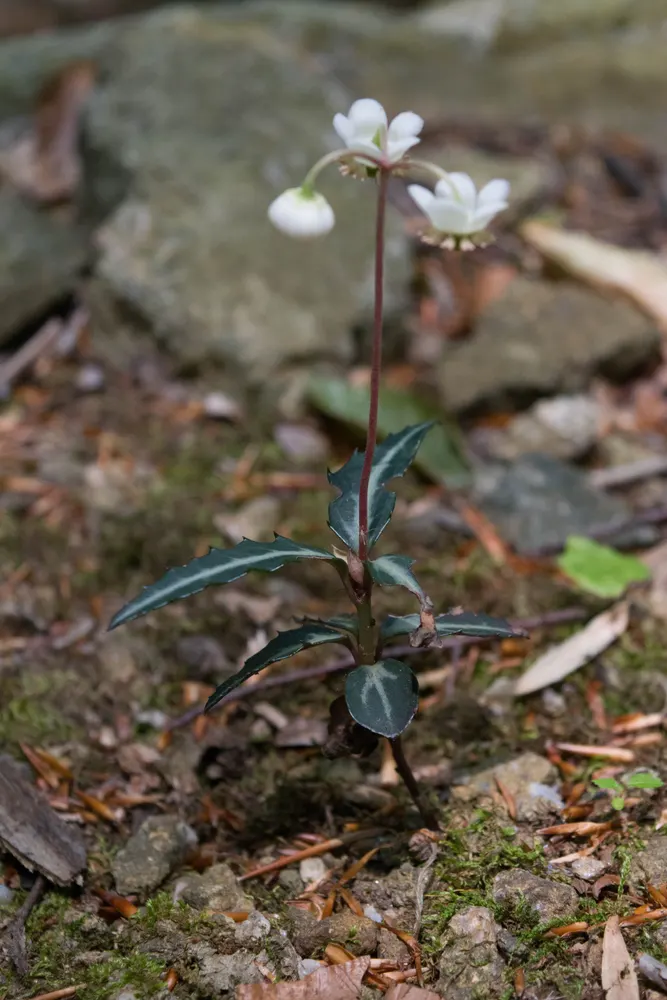
Photo: Wasp32, CC BY 4.0 (via Wikimedia Commons)
Striped Wintergreen
Chimaphila maculata
Also known as Spotted Wintergreen, Spotted Pipsissewa, Striped Prince's Pine, Rat's Vein
Key benefits
✦Traditional uses
✦Striped wintergreen was gathered by several Native American nations, including the Cherokee, who steeped the leaves as a wash and tonic for aches and skin troubles long before botanists in the eastern woodlands took notice of it. Nineteenth century eclectic physicians folded it into their materia medica as a close cousin of pipsissewa, prizing it as a gentle astringent and diuretic for the urinary tract. Country herbalists also brewed the leaves into a cooled wash, applied to minor skin irritations and slow healing sores. Because the plant is so unassuming, tucked low beneath the pines, its reputation has always been that of a quiet, dependable helper rather than a showy cure.
How to grow & use it
✦The full apothecary for Striped Wintergreen
Traditional remedies and step-by-step preparations, a complete growing guide, and how to harvest, dry, and store it, all unlocked with HerbLens Unlimited.
- ✦Remedies & preparations
- ✦ Growing guide
- ✦Harvest & storage
From under $6 a month. Free plant identifications always included.
- ✦Uva Ursi
- ✦Cleavers
- ✦Dandelion Leaf
- ✦Chimaphila umbellata (Pipsissewa)
- ✦Uva Ursi
“For the plant that keeps to the shadows of old pine woods, offering its help quietly and asking little in return.”
Striped wintergreen cannot simply be dug up and replanted in a garden bed. Its roots are so closely woven into underground fungal networks linking it to nearby trees that transplanting almost always kills it, a quiet botanical partnership known as mycoheterotrophy.
Striped wintergreen contains arbutin, so it should only be used in modest amounts and not over long stretches. Avoid it during pregnancy, while nursing, for young children, or if you have kidney disease.