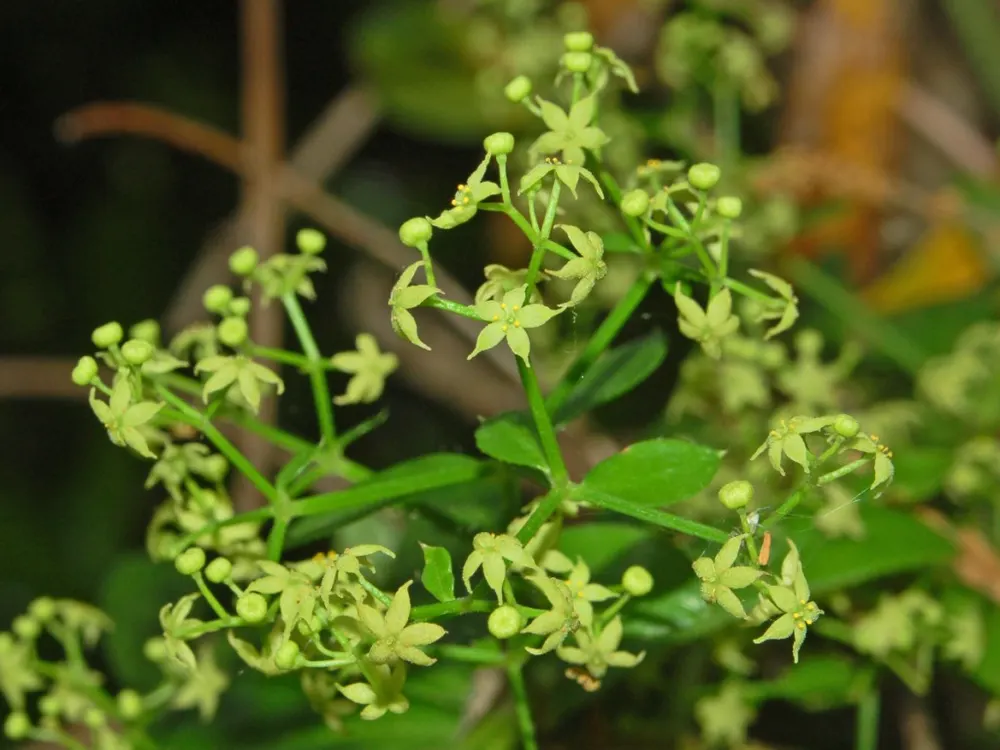
Photo: Hectonichus, CC BY-SA 3.0 (via Wikimedia Commons)
Wild Madder
Rubia peregrina
Also known as Wild Madder, Rambling Madder, Spanish Madder
Key benefits
✦Traditional uses
✦Wild madder is the shaggy, scrambling cousin of the cultivated dye plant Rubia tinctorum, and for centuries foragers along Mediterranean hedgerows and rocky banks pulled its long roots for the same reason: a rich reddish pigment locked inside. Dyers going back to antiquity relied on madder roots to color wool, linen, and leather in shades from soft rose to deep brick red, a craft practiced from ancient Egypt through the great European textile guilds. Village herbalists also kept a place for the root in the old apothecary, turning to it as a folk remedy for kidney and bladder complaints and to encourage menstrual flow, though these internal traditions have quietly fallen out of use as later research took a closer look at the plant's natural pigments. Today wild madder is valued more as a living thread to that dyeing heritage than as something to steep and drink.
How to grow & use it
✦The full apothecary for Wild Madder
Traditional remedies and step-by-step preparations, a complete growing guide, and how to harvest, dry, and store it, all unlocked with HerbLens Unlimited.
- ✦Remedies & preparations
- ✦ Growing guide
- ✦Harvest & storage
From under $6 a month. Free plant identifications always included.
- ✦Weld
- ✦Dyer's woad
- ✦Rubia tinctorum (common madder)
“For the forager drawn to old crafts more than old teacups, a hedgerow vine that still holds sunset color in its roots.”
The famous red coats worn by British soldiers were dyed for generations using madder root, a tradition so tied to the color that the plant's cultivated cousin was once called simply dyer's red.
Madder root contains natural pigments linked to genotoxicity concerns, and the UK withdrew licenses for madder root herbal products in 2004 on this basis, so it isn't recommended for internal use, teas, or tinctures. Handling fresh roots can also irritate skin, so wear gloves when digging or processing it.