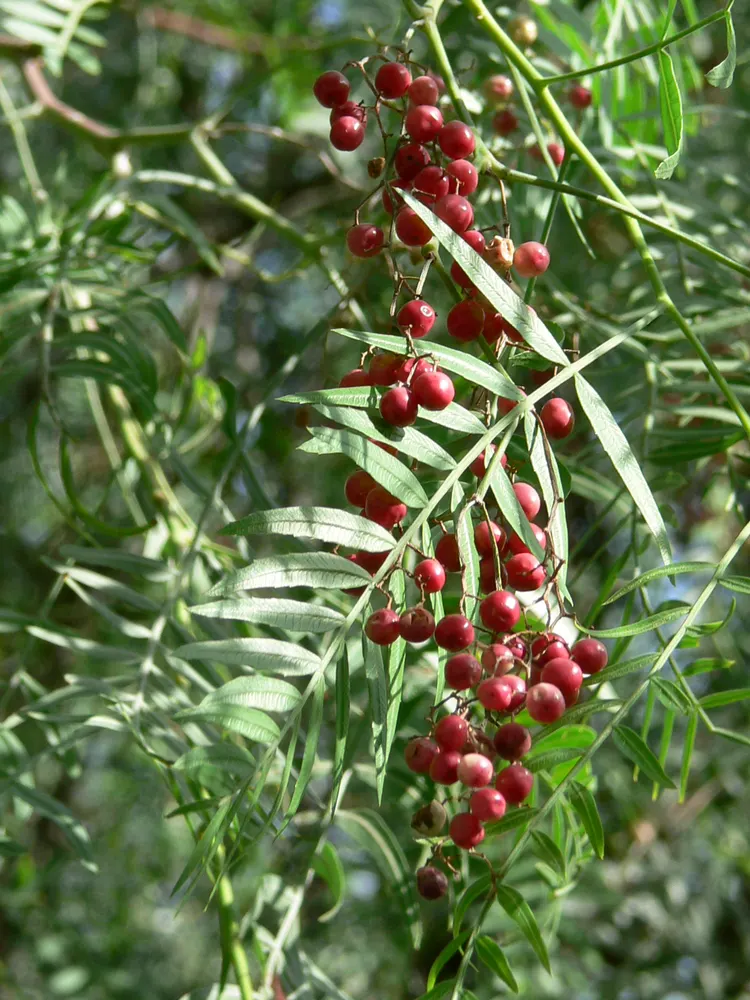
Photo: Squeezeweasel at en.wikipedia, CC BY 2.5 (via Wikimedia Commons)
Peruvian Peppertree
Schinus molle
Also known as California Pepper Tree, Peruvian Pepper Tree, Molle, Pink Peppercorn Tree, American Pepper
Key benefits
✦Traditional uses
✦Long before it traveled the world, molle stood as a sacred tree of the Andes, planted around Incan temples and homes and so valued that its wood, resin, and berries found their way into embalming practices, dyes, and a fermented beverage called chicha de molle. Andean healers steeped its leaves and bark as a wash for wounds and skin troubles, and drank a mild infusion for coughs, colds, and stomach complaints. Spanish colonists later carried it to California and beyond, where it was planted along roads and missions and simply came to be known as the pepper tree. Today its rosy berries are harvested and sold the world over as pink peppercorns, a fragrant echo of its old Andean name.
How to grow & use it
✦The full apothecary for Peruvian Peppertree
Traditional remedies and step-by-step preparations, a complete growing guide, and how to harvest, dry, and store it, all unlocked with HerbLens Unlimited.
- ✦Remedies & preparations
- ✦ Growing guide
- ✦Harvest & storage
From under $6 a month. Free plant identifications always included.
- ✦Eucalyptus
- ✦Rosemary
- ✦Elderflower
- ✦Black pepper (Piper nigrum), for a culinary substitute
- ✦Brazilian peppertree (Schinus terebinthifolius), its close and similarly used relative
“For a spice with the warmth of the old Andes and roots that still remember the temples of the Incas.”
The pink peppercorns lining grocery shelves are not true pepper at all. Piper nigrum, the plant behind black, white, and green peppercorns, is unrelated. That warm pink berry is molle, carrying its Andean name into kitchens that have no idea where it came from.
Peruvian peppertree is in the same family as poison ivy and cashew, and its sap and crushed leaves can cause contact dermatitis, especially in people sensitive to cashew or mango. Small culinary amounts of the pink peppercorn berries are fine, but larger amounts of berries, leaves, or bark are purgative and documented harmful to birds, poultry, and grazing livestock, so keep trimmings away from animals. It isn't recommended during pregnancy or while breastfeeding.