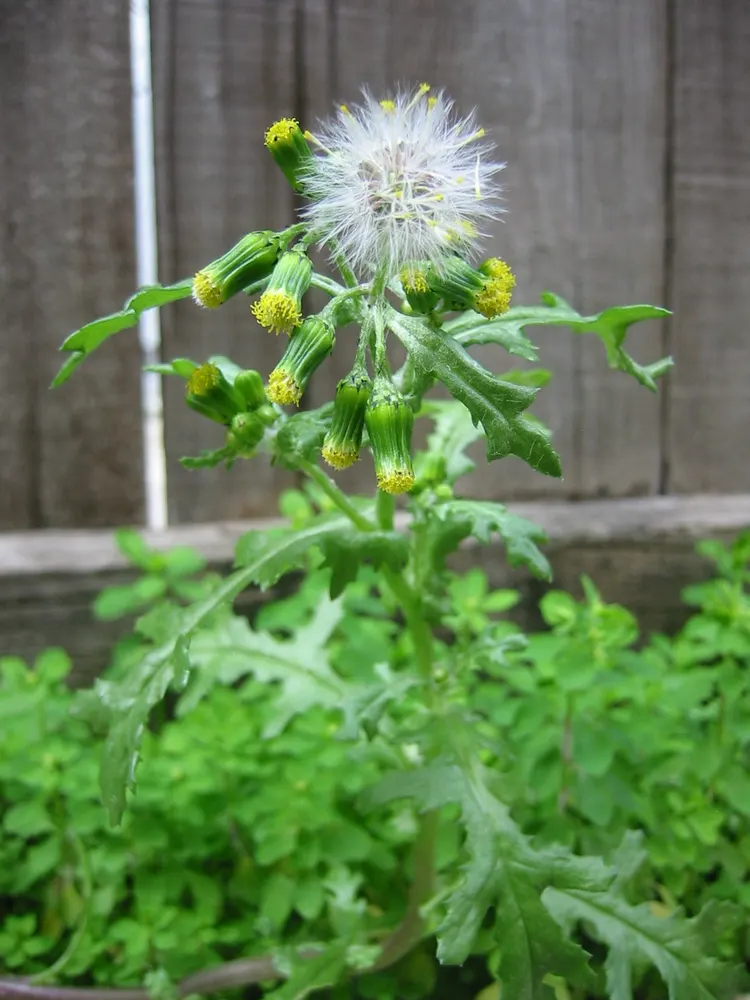
Photo: carol, CC BY-SA 3.0 (via Wikimedia Commons)
Groundsel
Senecio vulgaris
Also known as Common Groundsel, Old Man in the Spring, Grundy Swallow, Ground Glutton, Simson
Key benefits
✦Traditional uses
✦Groundsel has been a familiar dooryard weed since at least medieval Europe, so common in gardens that its Old English name, grundeswelge, means roughly ground swallower, for how fast it overtakes bare soil. Herbalists like Culpeper once recommended a poultice of the bruised leaves for boils, bruises, and chafed skin, and countryfolk fed the fresh tops to caged canaries and finches, which is where the old nickname simson, or little groundsel, comes from. It was also given to horses and cattle as a folk purgative and wormer for generations. Modern research uncovered why that practice was eventually abandoned: the plant carries pyrrolizidine alkaloids that build up in the liver, and its once-common internal uses in people and livestock are now understood to have been quietly dangerous.
How to grow & use it
✦The full apothecary for Groundsel
Traditional remedies and step-by-step preparations, a complete growing guide, and how to harvest, dry, and store it, all unlocked with HerbLens Unlimited.
- ✦Remedies & preparations
- ✦ Growing guide
- ✦Harvest & storage
From under $6 a month. Free plant identifications always included.
- ✦Calendula (for traditional external wound and skin care)
- ✦Plantain leaf (for traditional poultice use on bites, stings, and minor scrapes)
“The tiny yellow weed at the edge of every garden bed, better learned by sight than gathered by hand.”
The cinnabar moth caterpillar feeds almost exclusively on groundsel and its relatives, storing up the plant's bitter pyrrolizidine alkaloids in its own striped orange and black body as a warning to predators that it, too, is unpleasant to eat.
Common groundsel is toxic and should not be eaten, brewed, or given to people or animals in any form. It contains pyrrolizidine alkaloids that accumulate in the liver and can cause serious, sometimes irreversible damage (hepatotoxicity and veno-occlusive disease) with repeated or even single significant exposure. Historical internal and veterinary uses of this plant are now recognized as unsafe and are the reason livestock poisoning from groundsel and its relatives is a well documented agricultural problem. It is unsafe during pregnancy and breastfeeding, since these alkaloids can pass into breast milk, and it should be kept well away from children, pets, and grazing animals, as poisoning can occur from contaminated hay or forage as well as fresh plant material. Handle it with gloves when weeding and wash hands afterward. If ingestion by a person, child, or animal is suspected, contact poison control or a veterinarian right away, and speak with a qualified healthcare professional or medical herbalist rather than relying on old folk remedies involving this plant.