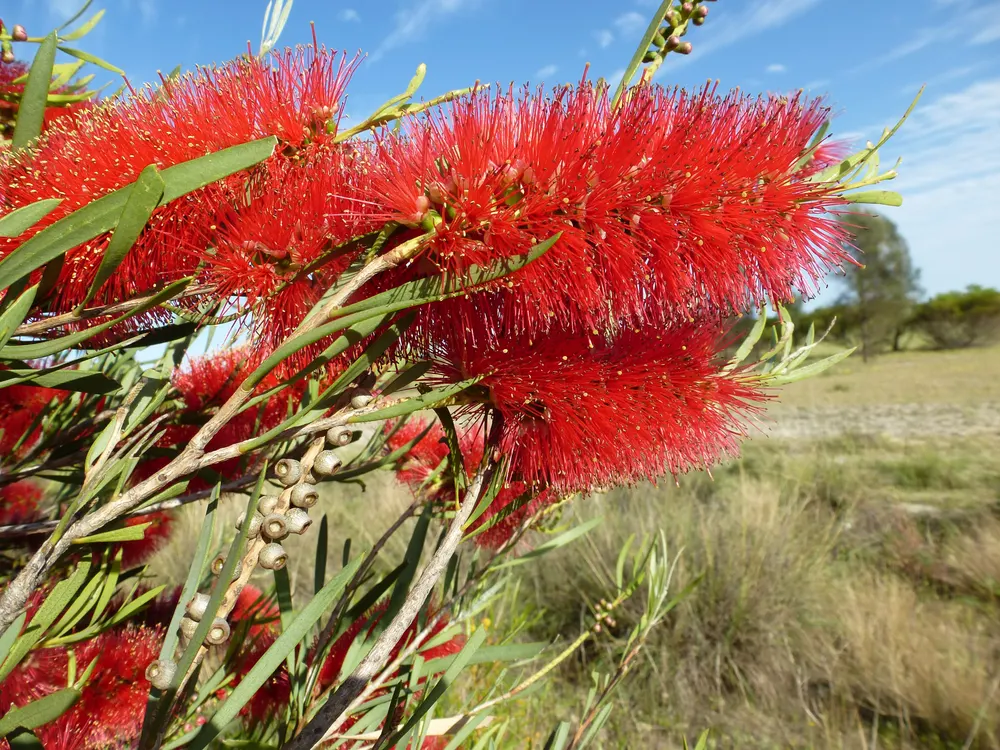
Photo: Geoff Derrin, CC BY-SA 4.0 (via Wikimedia Commons)
Fiery Bottlebrush
Callistemon phoeniceus
Also known as Fiery Bottlebrush, Scarlet Bottlebrush, Lesser Bottlebrush
Key benefits
✦Traditional uses
✦In its native heath and woodland of southwestern Australia, the fiery bottlebrush was as much a fixture of the ecosystem as of the eye, drawing honeyeaters, bees, and beetles to its crimson, bristled blooms for the sweet nectar pooled at the base of each flower. Aboriginal peoples of the region are known to have shaken or steeped bottlebrush flower spikes in water to draw out this nectar, creating a lightly sweet drink long before European settlers arrived. When British colonists began cultivating Australian natives in the 1800s, Callistemon phoeniceus was among the showiest additions to ornamental gardens, prized for a bloom so vivid it seemed to smolder against gray green foliage. Today it is valued less as a medicine chest herb and more as a living beacon for pollinators, a plant grown to feed the garden rather than the household.
How to grow & use it
✦The full apothecary for Fiery Bottlebrush
Traditional remedies and step-by-step preparations, a complete growing guide, and how to harvest, dry, and store it, all unlocked with HerbLens Unlimited.
- ✦Remedies & preparations
- ✦ Growing guide
- ✦Harvest & storage
From under $6 a month. Free plant identifications always included.
- ✦Kangaroo paw
- ✦Grevillea
- ✦Banksia
- ✦Melaleuca (paperbark)
- ✦Grevillea
“When the garden needs a blaze of scarlet that hums with bees and flashes with honeyeaters.”
The red bristles that give bottlebrush its name are not petals at all, they are the flower's stamens; the true petals are tiny, pale, and drop away within days of the bloom opening.
This is an ornamental garden plant with no real tradition of internal use, though its pollen can trigger reactions in people prone to plant allergies.