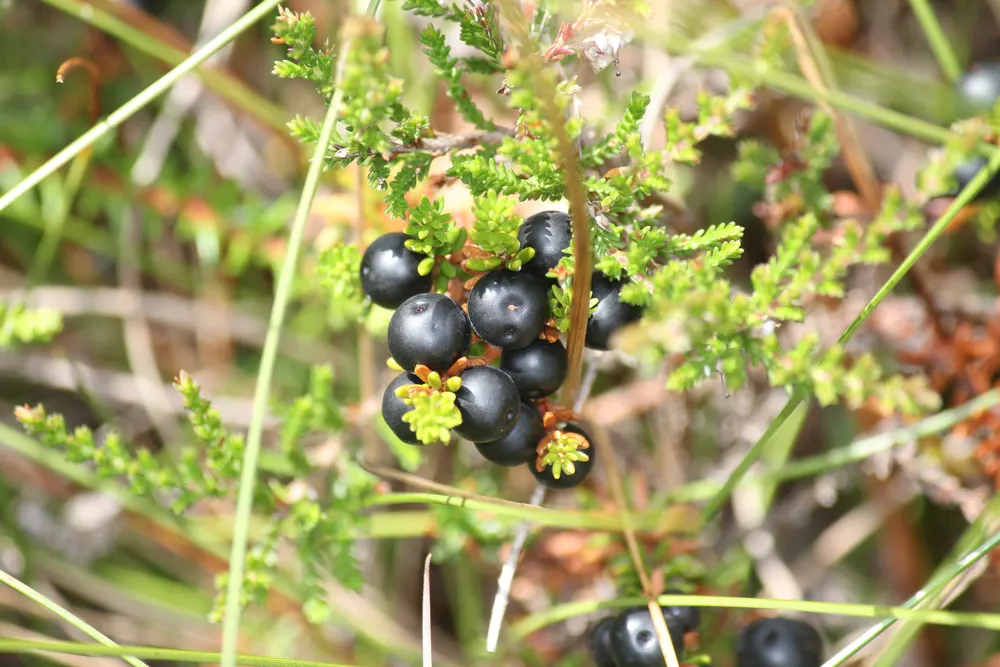
Photo: Maseltov, CC BY-SA 3.0 de (via Wikimedia Commons)
Crowberry
Empetrum nigrum
Also known as Black Crowberry, Curlewberry, Crakeberry, Heathberry
Key benefits
✦Traditional uses
✦Long before it had a place in any herbal, the crowberry fed the people of the far north. Inuit, Sami, and other circumpolar and northern First Nations communities gathered the small black berries by the basketful, eating them fresh off the low mats, folding them into akutaq (a whipped mixture of fat, berries, and sometimes fish), or drying them for the lean months when little else grew. Because the berries hold on the plant through winter and often turn sweeter after a hard frost, they became a trusted emergency ration for hunters and travelers caught far from camp, prized simply for the moisture and sugar they offered on a long cold trek. Some communities also steeped the leaves and stems as a mild traditional remedy for an unsettled stomach, and travelers reached for the tart berries themselves to relieve thirst when open water was scarce.
How to grow & use it
✦The full apothecary for Crowberry
Traditional remedies and step-by-step preparations, a complete growing guide, and how to harvest, dry, and store it, all unlocked with HerbLens Unlimited.
- ✦Remedies & preparations
- ✦ Growing guide
- ✦Harvest & storage
From under $6 a month. Free plant identifications always included.
- ✦Lingonberry
- ✦Bilberry
- ✦Birch leaf
- ✦Lingonberry
- ✦Bilberry
“For the dark, low mat that holds its fruit through the first snow, offering sweetness to whoever is still walking.”
The crowberry plant is remarkably long-lived for something so low and unassuming, with individual mats in the far north estimated to survive well over a century, quietly outlasting the reindeer, foxes, and generations of foragers that pass over them each season.
Crowberries are a safe, traditional wild food, though eating a large quantity at once may bring on a headache or drowsiness for some people.