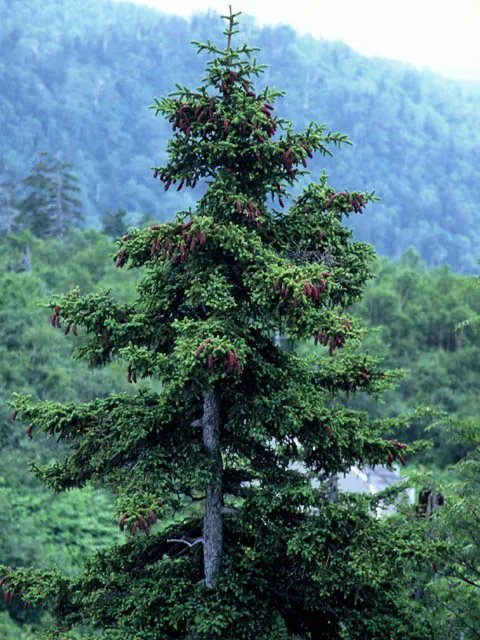
Photo: No machine-readable author provided. Inti-sol~commonswiki assumed (based on copyright claims)., CC BY-SA 3.0 (via Wikimedia Commons)
Yezo Spruce
Picea jezoensis
Also known as Jezo Spruce, Ajan Spruce, Manchurian Spruce, Hondo Spruce (var. hondoensis)
Key benefits
✦Traditional uses
✦Long before refrigerated ships and vitamin tablets, foresters and sailors across the northern Pacific rim chewed fresh spruce tips or brewed them into tea to fend off scurvy through the long, dark winters. In Hokkaido, the Ainu people knew the tree intimately, using its resin and boughs in daily life and prizing its wood for tools and dwellings. Across Sakhalin and the Russian Far East, the young spring shoots, tender and citrusy, were traditionally steeped as a warming tea to soothe winter coughs and colds. Its wood, prized for resonance, later found a second life as tonewood in pianos and violins made in Japan.
How to grow & use it
✦The full apothecary for Yezo Spruce
Traditional remedies and step-by-step preparations, a complete growing guide, and how to harvest, dry, and store it, all unlocked with HerbLens Unlimited.
- ✦Remedies & preparations
- ✦ Growing guide
- ✦Harvest & storage
From under $6 a month. Free plant identifications always included.
- ✦Rosehip
- ✦Ginger
- ✦Douglas fir tips
- ✦Norway spruce
- ✦White pine
“For that first crisp breath of a northern forest, resin and citrus caught in a single cup.”
The wood of the Yezo spruce is prized by Japanese instrument makers for its resonance, and it has been used as a soundboard tonewood in pianos, much like its cousin Sitka spruce is used for guitars and violins in North America.
Confirm identification before harvesting spruce tips, since spruce can be confused with yew, which is highly toxic. Spruce tip preparations are traditionally used lightly, but the essential oil is for aromatic use only, never internal, and conifer resin can trigger allergic reactions in sensitive people.