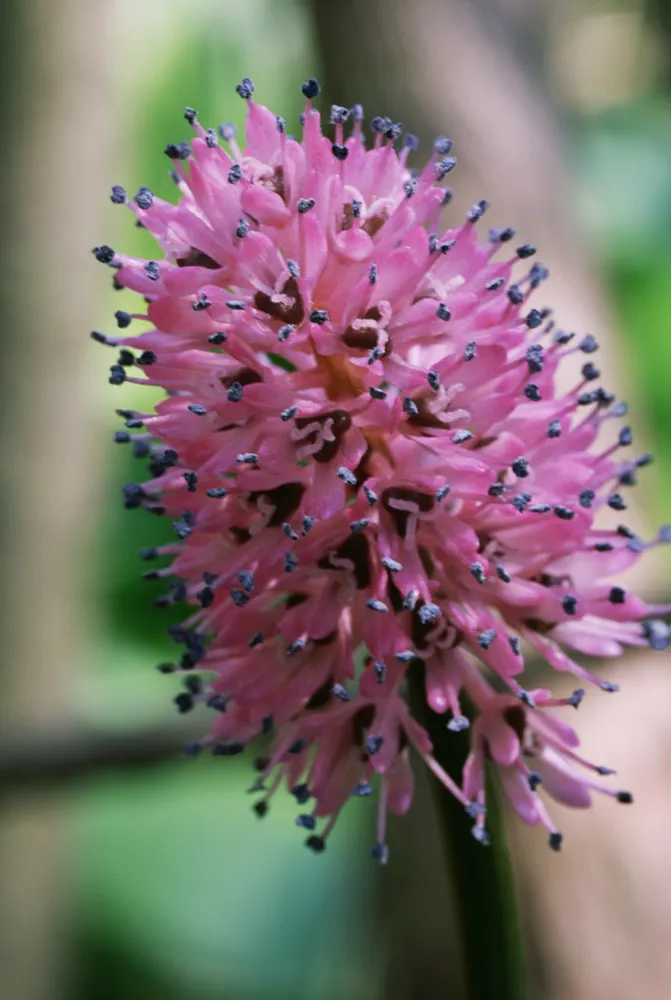
Photo: Nieminen, Gene Publisher=U.S. Fish and Wildlife Service, Public domain (via Wikimedia Commons)
Swamp Pink
Helonias bullata
Also known as Swamp Pink, Helonias, Stud-Flower
Key benefits
✦Traditional uses
✦Swamp pink does not carry a genuine tradition of herbal or medicinal use, and no responsible reference should claim otherwise. Its story is a botanical and conservation one rather than an apothecary one: it is one of the rarest wildflowers of the eastern American wetlands, so localized and slow to spread that it was among the first plants protected when the Endangered Species Act was strengthened in the 1970s and 80s. People who know this plant tend to be naturalists, bog walkers, and native plant gardeners who cherish it for the way its pink-lavender flower spikes appear like a promise while the surrounding swamp is still bare and brown. Its value has always been ecological and aesthetic, a small miracle of persistence in a shrinking habitat, rather than something to be picked, steeped, or eaten.
How to grow & use it
✦The full apothecary for Swamp Pink
Traditional remedies and step-by-step preparations, a complete growing guide, and how to harvest, dry, and store it, all unlocked with HerbLens Unlimited.
- ✦Remedies & preparations
- ✦ Growing guide
- ✦Harvest & storage
From under $6 a month. Free plant identifications always included.
- ✦Skunk cabbage
- ✦Cinnamon fern
- ✦Marsh marigold
- ✦None. Swamp pink is not used medicinally, so no herbal substitute applies. It is sometimes confused by name alone with false unicorn root (Chamaelirium luteum), an unrelated plant once called 'Helonias' in old pharmacopeias, but the two should never be treated as interchangeable.
“For the hushed, boggy corner of a garden where almost nothing else dares to bloom while winter is still letting go.”
For over a century, herbal texts confused swamp pink with an entirely different plant, Chamaelirium luteum, because that species was once classified as Helonias dioica and sold under the name 'Helonias root.' Botanists later split the two genera apart, but the mix-up still echoes through old herbal literature, even though true Helonias bullata itself was never part of that medicinal tradition.
Swamp pink is a federally threatened wildflower, and digging or disturbing it in the wild is illegal. It has no history of medicinal use and shouldn't be confused with the unrelated herb false unicorn root (Chamaelirium luteum), which once carried a similar old name.